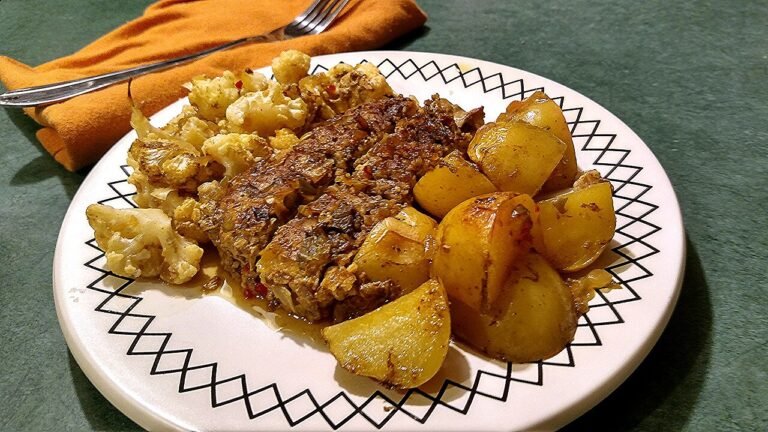
Short answer: how to host a Friendsgiving when you’re still building your circle comes down to four early decisions: a date that avoids family plans, six to ten guests from places you already go each week, a clear answer to who pays, and a simple run-of-show for the evening.
Thanksgiving is Thursday, November 26, 2026, so the Saturday before or after works for most people. For money, pick potluck, split the cost or host covers the main. Send invites two to three weeks ahead, assign dishes in a shared list, and end the night by suggesting the next plan. This guide gives you a timeline, cost math in USD, invite scripts and a worked example.
Why Friendsgiving works for meeting people
Most advice about making friends as an adult says the same thing: you need repeated time together and a reason to invite people. Friendsgiving gives you both for free. It’s a recognized format, so an invitation doesn’t feel strange or intense. “I’m hosting a Friendsgiving, want to come?” is far easier to say than “Want to be friends?” It also has a built-in topic (food), a built-in job for every guest (bring a dish) and a natural follow-up (leftovers, photos, “let’s do this again”).
That matters if you’ve recently moved, changed jobs or gone through a breakup and your social life thinned out. You don’t need a big friend group to host. You need five or six people you’ve had a few good conversations with: a coworker, a neighbor, someone from your climbing class, a friend of a friend. A shared meal moves those acquaintances a notch closer, and it puts you in the useful role of the person who brings people together.
If you’re starting from almost zero, read our guide on how to make friends as an adult first; it explains why repeated contact matters more than any single event. Friendsgiving is one strong event inside that bigger routine.
How to host a Friendsgiving: step by step
Here is the whole process on one page. Each step has its own section below.
- Three to four weeks out: choose the date, the format (potluck, split or host-covers-main) and whether it’s at home or a public venue.
- Two to three weeks out: invite six to ten people, with a reply-by date. Ask about dietary needs in the same message.
- Ten days out: share a sign-up list for dishes, drinks and supplies. Fill the gaps yourself or reassign.
- One week out: buy or order the main. If it’s a frozen turkey, plan the thaw time now (see below).
- Two days out: confirm the headcount, send the address and arrival time, and set up a group chat if you haven’t already.
- On the day: follow a loose run-of-show: arrival snacks, introductions, the meal, one group game or gratitude round, dessert.
- Within 48 hours: send photos and a thank-you, and suggest the next small plan while the good feeling is fresh.
Pick a date and a venue
The date
In the United States, Thanksgiving falls on the fourth Thursday of November, which in 2026 is Thursday, November 26. Many people travel to family that week, so most Friendsgivings land on the weekend before (Saturday, November 21) or the weekend after (Saturday, November 28). The weekend before tends to work better for meeting new people: guests are still in town, and nobody is tired of turkey yet.
Canadian readers: Canadian Thanksgiving was Monday, October 12, 2026. A late-November Friendsgiving still works in Canada; just call it a “fall potluck” or a “Friendsgiving” without the turkey pressure, since many guests will have had their holiday meal already.
Pick a start time that doesn’t eat the whole day. A 5 p.m. arrival with food around 6 p.m. gives people time to travel, and lets anyone with a later commitment leave politely.
Home or a public venue?
Hosting at home is the classic version and the cheapest. It’s also more intimate, which is great with people you already know a little and less comfortable with people you’ve met once. If several guests are new to you, or your place is small, consider:
- A restaurant’s private table or back room. Everyone orders and pays their own, and nobody has to cook. Ask about group minimums before you book.
- A community room. Some apartment buildings, libraries and community centers rent or lend rooms; rules on food and fees vary, so ask locally.
- A co-hosted home dinner. Partner with a friend or coworker and host at whichever place is bigger. Two hosts means two friend groups mixing, which is exactly the point.
Who to invite when you’re new
You don’t need close friends to host. Look at the places you already go every week and pick people you’ve had at least one real conversation with:
- Coworkers you chat with beyond work topics (especially other transplants who may not be going home).
- Neighbors you nod to in the hallway or the elevator. Our guide on how to meet your neighbors has scripts if you haven’t spoken yet.
- Class, club or league people: the run club regular, the pottery classmate, your trivia teammate.
- Friends of friends: the person you met at someone’s birthday and liked.
The +1 rule
When you’re new, let each guest bring one friend. It takes pressure off people who don’t know anyone, and it grows your circle faster than any other move: the plus-ones are the people you would never have met otherwise. Ask for their names in advance so you can plan seats and food.
How many people?
Six to ten is the sweet spot. Under six, the evening depends heavily on everyone clicking. Over twelve, it splits into small clusters and you’ll spend the night in the kitchen instead of getting to know anyone. If you invite ten, expect seven or eight to come; some people always drop out around the holiday.
Who pays: potluck vs split vs host covers the main
Money is where hosting with new people gets awkward, so decide the format before you invite and say it in the invitation. There are three common models:
| Format | Typical cost per person | Host effort | Best for |
|---|---|---|---|
| Classic potluck (host makes the main, guests bring sides) | Host: highest. Guests: the cost of one dish | Medium | Groups where most people cook a little |
| Split the cost (host buys everything, everyone chips in an equal share) | Equal share of the total | High (all the shopping and cooking) | Busy guests, people with small kitchens |
| Host covers the main, guests bring drinks or dessert | Host: the main. Guests: small | Medium | Hosts who want to be generous without paying for everything |
| Restaurant, everyone pays their own | Whatever each person orders | Low | Guests who are new to each other, small apartments |
A worked cost example (USD)
For a sense of scale, the American Farm Bureau Federation’s 2025 survey priced a classic Thanksgiving dinner for 10 at about $55.18, roughly $5.52 per person, with a 16-pound frozen turkey averaging about $21.50 (AFBF, November 2025). That covers a basic shopping list (turkey, stuffing, sweet potatoes, rolls, peas, cranberries, a veggie tray, pumpkin pie and whipped cream, milk), not drinks, appetizers or anything fancy. AFBF usually publishes its new survey shortly before Thanksgiving, so check for the 2026 figure when you shop.
Here is how the three money models play out for eight people, assuming a slightly bigger spread than the survey basket:
- Potluck: you buy the turkey and gravy (around $25 to $35 depending on your store), and each guest brings one dish. Nobody owes anyone anything.
- Split: you spend, say, $96 on everything and ask for $12 each through whatever payment app the group already uses. State the amount up front (“about $12 each, covers food, bring your own drinks”).
- Host covers the main: you pay for the turkey and two sides; guests bring wine, sparkling water or dessert.
Treat these as illustrations, not quotes: grocery prices vary by city and store. The point is that any of the three formats keeps the per-person cost modest, as long as you name the format before people say yes.
Who brings what: a sign-up list that works
The classic Friendsgiving failure is four people bringing mac and cheese and nobody bringing plates. A shared list in a notes app, a shared doc or the group chat fixes that. Split it into slots, not vague categories:
- Host: turkey or main dish, gravy, serving spoons, the table.
- Sides (3 to 4 people): mashed potatoes, stuffing, a green vegetable, a salad, rolls.
- Something for dietary needs (1 person): a vegetarian main or a gluten-free side.
- Dessert (1 to 2 people): pie, cookies or something no-bake.
- Drinks (1 to 2 people): include at least one good non-alcoholic option.
- Supplies (1 person): ice, napkins, takeaway containers for leftovers.
Give people who don’t cook an easy role: ice and containers, a store-bought pie, or setting up a playlist. A no-cook option means nobody declines because they’re embarrassed about their kitchen skills.

A quick food-safety note
If you’re cooking a frozen turkey for the first time, the USDA’s guidance is to thaw it in the refrigerator, allowing about 24 hours for every 4 to 5 pounds, and to cook it until a food thermometer reads 165°F (74°C) in the thickest part of the thigh, wing and breast. A 16-pound bird therefore needs about four days in the fridge, which is why step 4 of the plan says to buy it a week out. Refrigerate leftovers within two hours.
Invite scripts
A good invitation has four things: what it is, when, where (or “my place, address to follow”), and who pays. It also makes it easy to say no. If asking still feels awkward, our guide on how to ask someone to hang out as a friend walks through the psychology.
Text to a coworker or classmate
“Hey! I’m hosting a small Friendsgiving on Saturday the 21st at my place, around 5 p.m. It’s a potluck: I’m doing the turkey, everyone brings one dish. You’re welcome to bring a friend too. No pressure if you’ve got plans, just let me know by the 14th.”
Message to a neighbor
“Hi, it’s Alex from 3B. A few of us are doing a Friendsgiving dinner on the 21st, mostly people new to the area. Would you like to come? Bring a side or a drink, nothing fancy.”
Group chat for a club or class
“Anyone around the weekend before Thanksgiving? I’m thinking of a Friendsgiving for the group on Saturday the 21st. Split format: I’ll shop and cook, about $12 each, bring your own drinks. Reply here if you’re in and I’ll send details.”
Following up with a no-reply
“Just checking if you saw this. Totally fine if it doesn’t work, I just need a headcount by Friday.”
Run-of-show for the evening
When guests don’t know each other well, structure is your friend. You don’t need a schedule on the fridge, just a rough shape in your head:
- Arrival (first 30 to 45 minutes): snacks and drinks out where people can gather, not in the kitchen. Introduce every new arrival to at least one person, with a hook: “This is Sam, she just moved from Denver and climbs at the same gym as me.”
- Quick name round when you sit down: name, how they know you, and one easy question, like “the dish you’d fight for at Thanksgiving.”
- The meal (60 to 90 minutes): seat people who don’t know each other next to each other, and keep couples or close friends apart.
- A gratitude round or a light game: “one good thing from this year” works without being heavy. Some groups prefer a quick game like two truths and a lie. Keep it optional; let people pass.
- Dessert and drift: the most relaxed conversations often happen here. This is when people swap numbers.
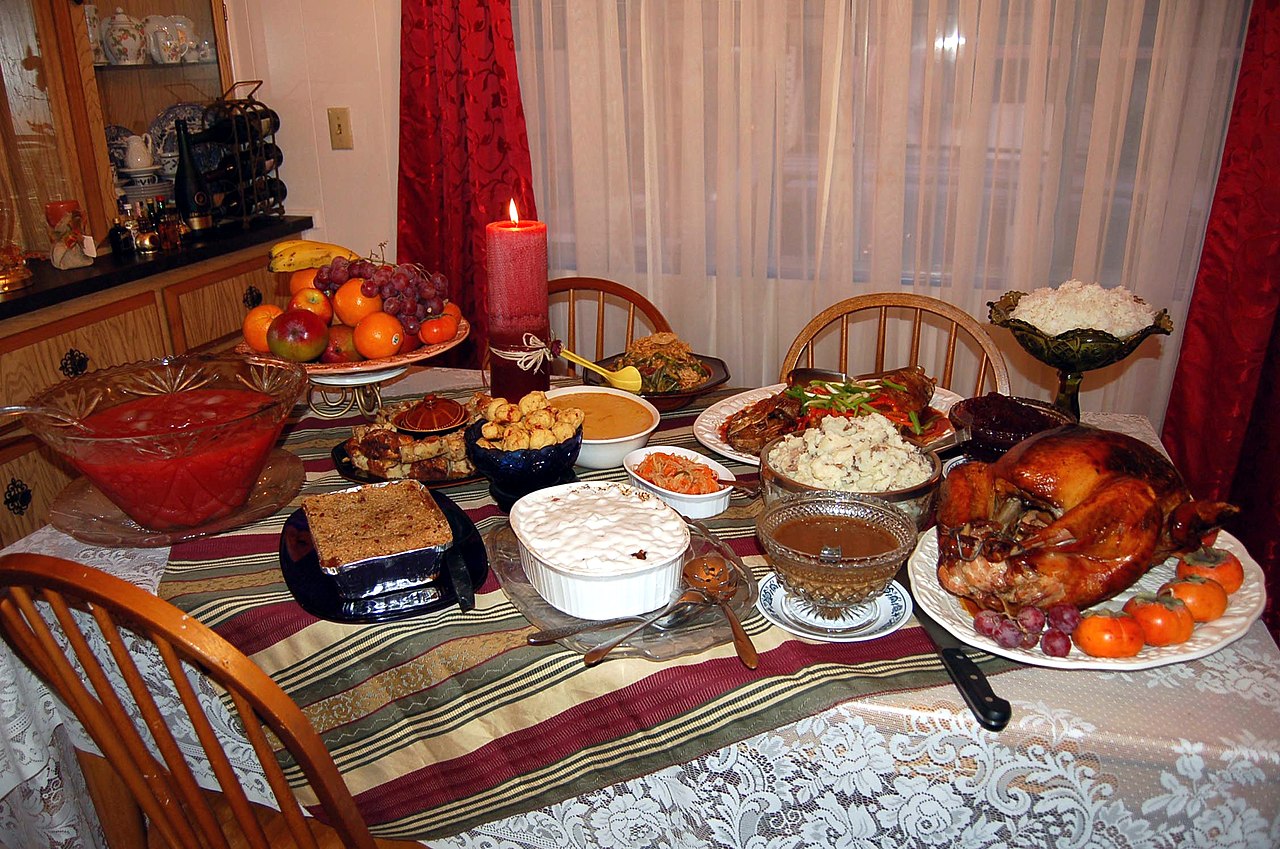
Have one or two backup conversation starters ready for lulls: favorite local spot so far, best trip this year, the weirdest family tradition. Introverted guests (and hosts) do better with a time frame, so “around 5 to 9” in the invite helps everyone.
After Friendsgiving: turn guests into a repeat plan
A single great dinner rarely turns acquaintances into friends on its own. What turns them into friends is the next plan. Within a day or two:
- Send photos to the group chat and thank everyone for coming.
- Name a specific next plan: “Holiday lights walk in two weeks?” or “Same group, game night in December?”
- Follow up one-on-one with the guest you clicked with most: “Great talking about hiking. Want to do the trail you mentioned?”
- Make it recurring if it went well: a monthly potluck with a rotating host keeps the group alive through winter.
New to the city and not sure where else to find people? Our guide on how to meet people in a new city has a step-by-step plan, and our list of where to meet new people ranks places by how fast you get to know regulars.
A worked example
Priya (a composite example) moved to Columbus in August for a new job. By November she knows a handful of people well enough to chat: two coworkers, a neighbor from her building, and three people from a Tuesday bouldering class. Her family is on the West Coast and she’s not flying home.
- Three weeks out: she picks Saturday, November 21, 5 p.m., potluck format, at her apartment. She asks her coworker Dana to co-host and help with the turkey.
- Invites: she texts the coworkers, messages the neighbor, and posts in the bouldering class chat, with the +1 rule. Ten invited, eight confirm (including two plus-ones she’s never met).
- Sign-up list: a shared note with twelve slots. One guest is vegetarian, so another signs up for a stuffed squash. The neighbor, who doesn’t cook, takes ice, napkins and containers.
- On the night: snacks in the living room, a quick name round at dinner (“the Thanksgiving dish you’d fight for”), a gratitude round over pie. Two climbers and one plus-one discover they all want to try a winter hike.
- After: Priya shares photos the next day and suggests a December game night. Five say yes. The hiking trio makes its own plan.
Her total cost: the turkey, gravy ingredients and a few supplies. More importantly, she now has a group chat of eight people who all met at her table.
Safety when guests are new to you
If you’re inviting people you’ve only met once or twice, it’s sensible to take a few precautions. Meet them first in a public place, such as a coffee before the dinner or at your shared class, and consider co-hosting so you’re not alone with people you barely know. If you’d rather not share your home address with near-strangers, choose a restaurant table. And as a guest, the usual rules apply: tell a friend where you’ll be, arrange your own way home, and leave if anything feels off.
Frequently asked questions (FAQ)
When should you have Friendsgiving in 2026?
Most people host on the weekend before or after Thanksgiving, which falls on Thursday, November 26, 2026. Saturday, November 21 or Saturday, November 28 are the most common choices. The weekend before usually works better if many guests travel to family for the holiday itself.
Does the host provide the turkey at Friendsgiving?
Traditionally, yes: in a potluck Friendsgiving the host makes the main dish and guests bring sides, drinks and dessert. That’s a convention, not a rule. You can also split the full cost equally or move the whole dinner to a restaurant where everyone pays their own. Just say which format it is in the invitation.
How do you host a Friendsgiving on a budget?
Use the potluck format, buy a smaller turkey or a turkey breast, and assign every dish so nothing is duplicated. AFBF’s 2025 survey put a classic dinner for 10 at about $55, so food for a group can be modest if everyone contributes one item.
How many people should you invite to Friendsgiving?
Six to ten guests works best. It’s big enough that the evening doesn’t hinge on everyone clicking and small enough for one shared conversation at the table. Invite a couple more than your target, because some people drop out around the holiday.
Can you host a Friendsgiving if you don’t have many friends?
Yes, and it’s one of the best reasons to host. Invite coworkers, neighbors and people from your classes or clubs, and let each guest bring one friend. You’ll leave with a larger circle than you started with.
What do you say in a Friendsgiving invitation?
Include the date, time, place, the format (potluck, split or restaurant), what guests should bring, a reply-by date and whether a plus-one is welcome. Keep it short and give people an easy way to decline.
Is Friendsgiving a thing in Canada?
Yes, though timing differs. Canadian Thanksgiving was Monday, October 12, 2026, so Canadian Friendsgivings often happen in October. A November get-together still works; many people simply call it a fall potluck.
Want to turn this into an actual plan? MeetNow is a free app for meeting people in person: a host posts a plan at a public place, says who pays (host pays, split, pay your own or free) and picks who joins. It is live on the web (works in your browser), starting in Malta. Open MeetNow and see the plans posted in Malta.
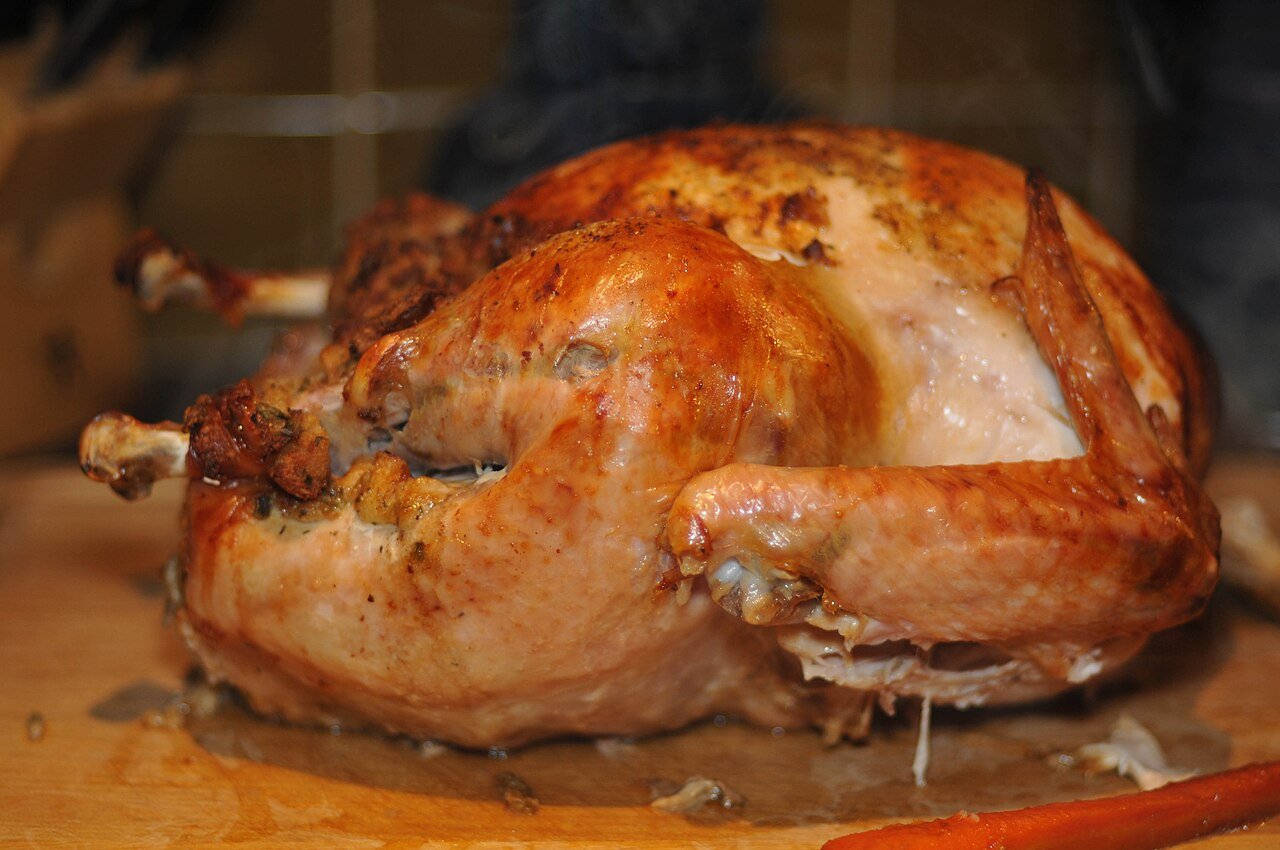
Featured image: roast turkey, photo by M. Rehemtulla, CC BY 2.0, via Wikimedia Commons.