Social prescribing is when a doctor, nurse or other health worker refers you to a non-medical activity in your community (a walking group, a community garden, an art class, volunteering, a choir) because the thing affecting your health is not only medical. Loneliness, isolation, stress, money worries and a lack of purpose all show up in clinics, and pills do not fix them. Social prescribing tries to connect people with the community supports that might.
The idea is mainstream in England’s National Health Service, growing fast in Canada, and still mostly at the pilot stage in the United States. This guide explains how it works, what the evidence does and does not show, where you can access it in the US and Canada in 2026, how to ask your own doctor about it, and how to “self-prescribe” if no formal program exists near you.
This article is general information, not medical advice. If you are struggling, talk to a health professional. In a crisis, call or text 988 in the US or 9-8-8 in Canada.
What is social prescribing?
At its simplest, social prescribing is a referral pathway. Someone in health care notices that a patient’s problems have social roots, and instead of (or alongside) medical treatment, they refer that patient to a person whose job is to connect them with community support. In England that person is called a link worker; in Canada and the US you will also see “navigator,” “connector” or “community health worker.”
The link worker does not hand over a leaflet. They sit down with the patient, ask what matters to them, and help them find and actually get to something: a men’s shed, a gardening club, a volunteering role, a debt advice service, an exercise class, a museum program. The “prescription” is the activity; the follow-up is what makes it different from simply being told to “get out more.”
Common types of social prescription include:
- Arts and culture: museum visits, choirs, art or music classes, theater.
- Nature: walking groups, community gardens, park programs, conservation volunteering.
- Physical activity: gentle exercise classes, dance, swimming sessions.
- Volunteering and purpose: food banks, mentoring, local charities.
- Practical support: housing, benefits, employment or financial advice.
- Peer and social groups: clubs, faith and cultural groups, support groups.
Loneliness is one of the main reasons people are referred, which makes sense: the health effects are real. Our article on the health effects of loneliness summarizes what the major reports say.
How it works, step by step
Programs differ, but most follow the same basic route:
- Identification. A family doctor, nurse practitioner, pharmacist, social worker or community organization notices that someone is isolated, stressed or struggling with non-medical issues. Some programs also accept self-referrals.
- Referral. The patient is referred to a link worker or navigator, with their consent.
- A “what matters to you” conversation. The link worker spends real time (often longer than a typical appointment) understanding the person’s situation, interests and barriers.
- Co-created plan. Together they choose one or two activities or services, and plan practicalities: cost, transport, accessibility, who to ask for at the door.
- Connection. The link worker introduces the person to the group or service, and sometimes goes with them the first time.
- Follow-up. They check in after a few weeks, adjust the plan, and close the loop with the referring clinician.
The steps that matter most are the last three. Plenty of people know there is a community garden nearby. What stops them going is not knowledge but energy, nerves, cost or not knowing a single person there. Social prescribing works on those barriers.

Who it is for
Programs were first designed with older adults and people with long-term conditions in mind, but the people who benefit are a wider group than that. Link workers commonly see:
- People going through a life change: a move, retirement, a breakup, bereavement, a new baby, a switch to remote work.
- People with long-term health conditions whose illness has shrunk their world, or who need gentle activity and company.
- People with mild to moderate low mood or anxiety, alongside (not instead of) other care.
- Frequent visitors to the clinic whose appointments are driven partly by isolation or stress.
- Carers who have lost touch with their own friends and interests while looking after someone else.
If you are 25 to 40 and recently moved or started working from home, you may not think of yourself as the target audience. You are. The mechanism (a regular activity, the same faces, someone who helps you over the first-visit hump) works at any age.

What the evidence says
The approach is popular with patients, clinicians and governments. The research base is improving but still mixed, and it is worth being honest about that.
- England has scaled it furthest. The NHS Long Term Plan (2019) committed to recruiting at least 1,000 social prescribing link workers into primary care by 2020/21 and set an ambition of at least 900,000 people referred by 2023/24. NHS England’s social prescribing page describes the model.
- Early reviews found weak evidence. A 2017 systematic review in BMJ Open, titled “Social prescribing: less rhetoric and more reality”, concluded that most studies were small, short and poorly controlled, and that the evidence was not yet strong enough to judge whether it worked or offered value for money.
- Pilots report encouraging, self-reported benefits. Participants in many evaluations say they feel less isolated and better in themselves, and clinicians value having something concrete to offer. The weakness is that most studies lack comparison groups, so it is hard to separate the effect of the program from people who were already motivated.
- The underlying science is stronger. Whether or not a specific program works, the link between social connection and health is well established. The US Surgeon General’s 2023 advisory and large meta-analyses by Julianne Holt-Lunstad and colleagues tie isolation and loneliness to higher risk of early death, heart disease and depression. See our roundup of loneliness statistics for the figures.
The fair summary: the “why” is solid, the “how best to deliver it” is still being worked out. That does not stop you using the idea personally, as the last section shows.
Social prescribing in Canada
Canada has moved faster than the US. Two names to know:
Rx: Community (Ontario)
The Alliance for Healthier Communities ran Rx: Community, described as Canada’s first social prescribing research pilot, across eleven community health centres in Ontario from 2018 to 2019. The pilot logged more than 1,100 clients and close to 3,300 social prescriptions. Its March 2020 final report recommended clear terminology, supportive navigators, letting clients set their own goals, and creating volunteer roles for people of all abilities. Many Ontario community health centres continue to offer it, so if you live in Ontario, your local CHC is the first place to ask.
Canadian Institute for Social Prescribing (CISP)
The Canadian Institute for Social Prescribing, launched in 2022 and backed by the Canadian Red Cross, works as a national network linking health systems, community groups and researchers. In 2024 it partnered with caregiver organizations on a two-year initiative bringing social prescribing to family caregivers in several provinces. Its website is the best starting point for finding programs and resources in your province.
In practice, access in Canada still depends heavily on where you live and which clinic you attend. Ask your family doctor or nurse practitioner, your local community health centre, or 211 (Canada’s free information and referral line) what exists near you.
Social prescribing in the United States
In the US, the approach is real but limited. There is no national program, and most activity sits in pilots run by states, health systems, universities and arts organizations.
- Massachusetts CultureRx. Launched in 2020 by Mass Cultural Council, a state agency, CultureRx let health care providers prescribe arts and culture experiences such as museum visits, music lessons, dance classes and nature sanctuary visits through partner organizations. A pilot evaluation published in Frontiers in Public Health found participants enjoyed their prescribed experiences and wanted to repeat them, and providers called it a valuable addition to their toolkit. The authors stress that the data were limited and the findings preliminary.
- Other pilots. Universities, health systems and arts groups in several states, including Florida and California, have run or are running similar projects, often focused on older adults, arts and health, or loneliness. Availability changes quickly, so check with your health system rather than relying on a list.
- Related services you may already have. Many US health systems screen for “social needs” (food, housing, transport) and employ community health workers or social workers who can connect you with local resources. Calling or texting 211 reaches a free United Way-supported referral line in most of the country.
If you are in the US, the honest expectation is this: your doctor may not use the term “social prescribing,” but many will take loneliness seriously if you raise it, and some can refer you to a social worker or community resource.
How to ask your doctor about it
Many people never mention loneliness in a medical appointment because it feels like the wrong place. It is not. Here is a simple way to raise it:
- Name it plainly. “I’ve been feeling really isolated for the last few months, and I think it’s affecting my sleep and mood.”
- Ask a direct question. “Is there a social worker, navigator or community program you can refer me to? I’ve read about social prescribing.”
- Say what you would enjoy. Gardening, walking, music, volunteering, something with animals. A specific interest makes a referral much easier.
- Mention barriers. Cost, transport, mobility, anxiety, childcare, language. These are exactly what a navigator is there to help with.
- Book a follow-up. Ask to check in after six to eight weeks.
If your loneliness comes with persistent low mood, hopelessness or anxiety, say so too. A referral like this complements mental health care; it does not replace it.
How to self-prescribe: a 6-week plan
If there is no program near you, you can borrow its structure. The core ingredients are a regular activity, real people, a plan that removes barriers, and a check-in. Our pillar guide on how to cope with loneliness goes deeper on weekly habits; this is the do-it-yourself version.
| Week | Action | Goal |
|---|---|---|
| 1 | Write down what matters to you and three activities that fit (outdoors, creative, helping, moving) | Your own “what matters to you” conversation |
| 2 | Find two recurring options within easy reach: library programs, parks and recreation classes, a community garden, a volunteer role | A shortlist with dates, cost and transport |
| 3 | Go to the first session. Arrive five minutes early and introduce yourself to the organizer | Show up once |
| 4 | Go again. Learn two names | Recognition starts with repetition |
| 5 | Go a third time and suggest a coffee or walk afterwards with one person | Turn a group into a connection |
| 6 | Review: how do you feel compared with week 1? Keep, swap or add one activity | Your own follow-up appointment |
Choosing well matters. Look for activities that repeat weekly with the same people, have a shared task (so conversation is easy), and sit close to home. Places like libraries, community centers and cafés that host regular groups are what sociologists call third places, and they are the natural home for self-prescribed connection. For ideas, our list of hobbies to meet new people ranks options by how social they are.
When you meet people from a new group one-on-one for the first time, keep it simple and safe: a public place, tell a friend where you are going, have your own way home, and leave if you feel uncomfortable.
Want to turn this into an actual plan? MeetNow is a free app for meeting people in person: a host posts a plan at a public place, says who pays (host pays, split, pay your own or free) and picks who joins. It is live on the web (works in your browser), starting in Malta. Open MeetNow and see the plans posted in Malta.
Frequently asked questions (FAQ)
What is an example of social prescribing?
A family doctor notices that a patient who recently retired is low and isolated. With the patient’s consent, they refer them to a link worker, who learns that the patient used to love gardening, finds a weekly community garden session nearby, and goes along the first time. A few weeks later the link worker checks in to see how it is going.
Is social prescribing available in the US?
Only in limited form. There is no national program, but states, health systems, universities and arts organizations run pilots, such as Massachusetts’ CultureRx. Many health systems also have social workers or community health workers who can connect you with local resources, and 211 offers free referrals in most areas.
How do I get a social prescription in Canada?
Ask your family doctor, nurse practitioner or local community health centre whether they offer it. In Ontario, many community health centres do. The Canadian Institute for Social Prescribing website and the 211 information line can also point you to local programs.
Does social prescribing actually work?
The evidence is promising but not conclusive. Participants in many programs report feeling less isolated and better overall, but many studies are small and lack comparison groups. The link between social connection and health is well established, which is why health systems keep investing in the approach.
Can I self-refer to social prescribing?
Some programs accept self-referrals; many require a referral from a health or social care professional. Either way, you can apply the same structure yourself: choose a weekly activity that matters to you, remove the barriers, show up repeatedly, and review after six weeks.
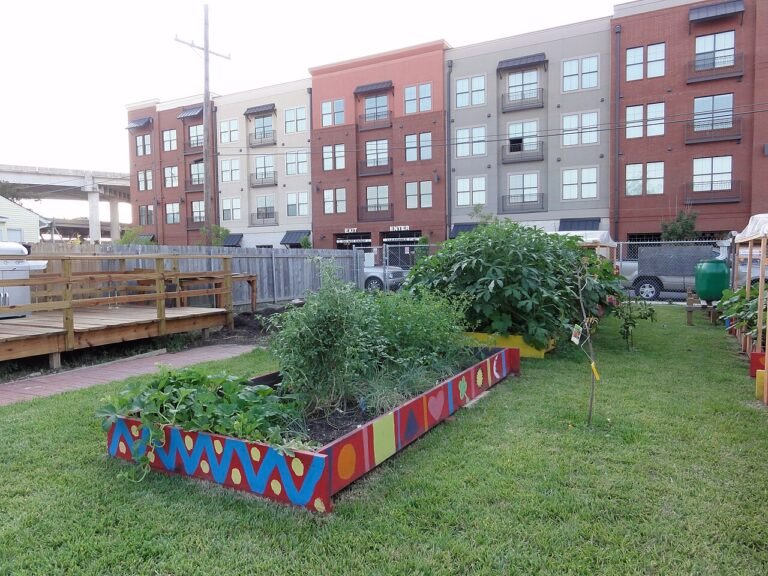
Featured photo: greens growing in the USDA People’s Garden, Washington, D.C., by USDA / Wikimedia Commons, public domain.