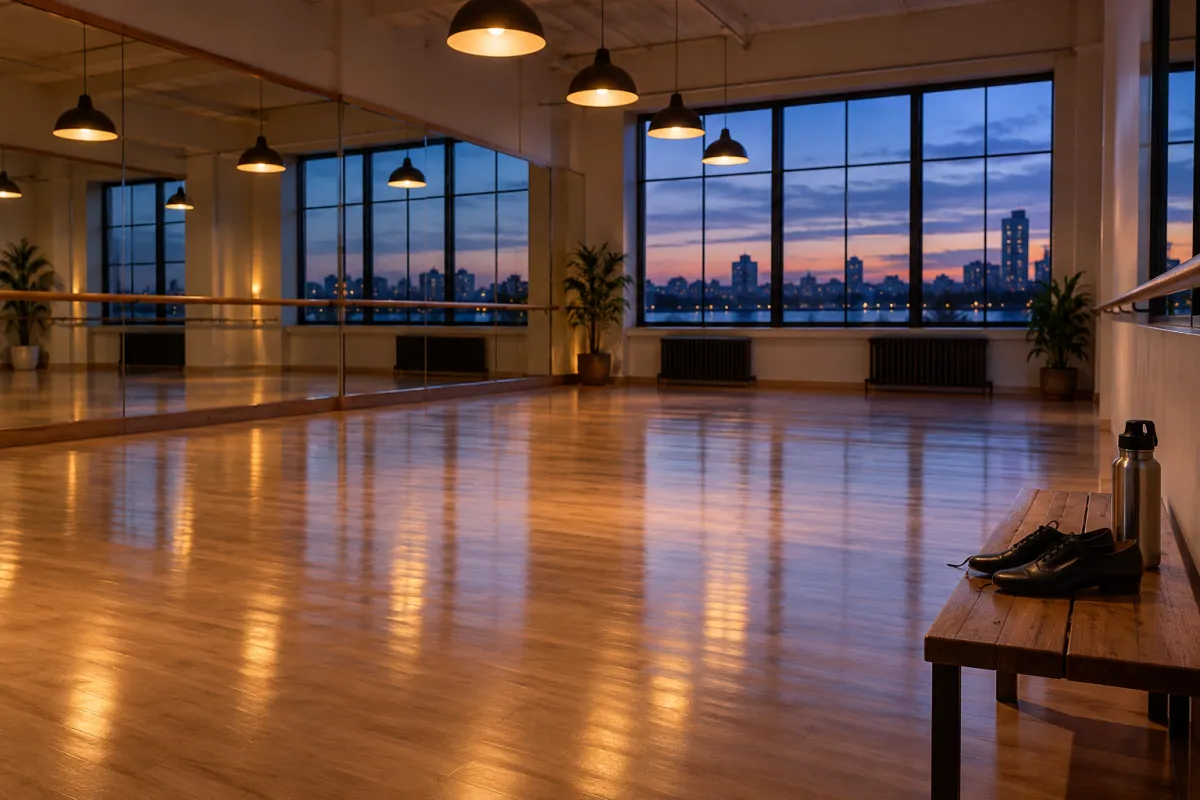
If you are trying to work out how to find a dance partner, here is the short answer: for most social styles you don’t need one to start. Salsa, bachata, swing, country two-step and many ballroom group classes rotate partners every few minutes, so you arrive alone and dance with everyone. A steady practice partner usually comes later, from the people you keep meeting at the same class and the same social dance every week.
This guide compares the places dancers in the US and Canada actually find partners, from studio group classes to nonprofit social dances, by cost, effort and who each one suits. It also gives you ready-to-copy messages for asking someone to practice, the etiquette that gets you asked back, and a first-meet safety checklist for when a dance partner is still a near-stranger.
Quick answer: Take a beginner group class with partner rotation in the style you want, then go to the social dance that the same studio or community runs. After three or four weeks, ask one person you click with to practice before or after class. If you want a fixed partner for competition or performance, use your teacher’s network and the partner-search listings that serious dancers use, and agree on goals and practice time before the first session.
Do you need a dance partner to start?
Probably not, and that surprises a lot of people. “Dance partner” means two different things, and mixing them up is why so many beginners stall before their first lesson.
The first meaning is a social partner: someone you dance one song with at a class or a social, then thank and move on. In most partner-dance communities, that is how everyone dances. Group classes rotate partners on purpose, because dancing with many leads or follows makes you a better dancer faster. You can show up alone to almost any beginner salsa, swing or two-step class and leave having danced with a dozen people.
The second meaning is a practice or fixed partner: one person you train with regularly, prepare a routine with, or enter competitions with. That partnership is worth having if you want to compete, perform or progress faster in a style like ballroom, where couples often train together. It is also much harder to find, because you need to match on level, goals, schedule and, in some styles, height.
So the practical plan is simple: start with rotation classes and socials, get to an improver level, and look for a practice partner among people you already know from the floor. If you are an introvert, rotation classes are a gentle way in, because the structure does the talking for you; our guide on making friends as an introvert explains why structured activities help.
How to find a dance partner: 7 places compared
Each option trades cost against effort and commitment. Most people who dance regularly end up using two of them: one weekly class and one recurring social dance.
| Option | Cost | Effort | Best for |
|---|---|---|---|
| Studio group classes with rotation | Per class or multi-week series; varies by city | Low: sign up and show up alone | Complete beginners who want structure |
| Social dances and practicas | Usually a modest door fee, often with a short lesson first | Low to medium: you have to ask people to dance | Meeting lots of partners in one evening |
| USA Dance chapter dances | Typically low-cost; check your local chapter | Low | Ballroom and Latin social dancing, singles welcome |
| Community and rec-center programs | Often lower than private studios | Low | Budget-friendly beginner series |
| Meetup and Facebook dance groups | Free to join; events vary | Medium: vet the group first | Finding socials and people new to the scene |
| Partner-search listings | Varies; some free, some paid | High: profiles, messages, tryouts | Competitive or performance partners |
| Post your own practice plan | Free, or split a practice-space fee | Medium | Improvers who want regular practice time |
Costs are general descriptions, not quotes. Prices vary widely by city and studio, so check the current price on each official site before you pay (last checked November 2026).
1. Studio group classes that rotate partners
A beginner group class is the most reliable first step. Ask before you book whether the class rotates partners; most social-dance classes do, and the teacher will balance leads and follows as best they can. Multi-week series beat drop-in classes for meeting people, because you see the same faces every week. Booking a four- or six-week beginner series is the single best move you can make.
2. Social dances and practicas
A social dance is where you use what you learned. Many socials start with a short beginner lesson, then open the floor. A practica is a relaxed practice session, common in tango, where couples work on moves between songs. Both are where practice partners are usually found, because you see who you dance well with and who keeps coming back.
3. USA Dance chapters
USA Dance, a nonprofit founded in 1965 as the United States Amateur Ballroom Dancers Association, supports local chapters across the country that run ballroom and Latin social dances. According to USA Dance, singles are welcome at all chapter dances, and chapter programs often include mixers and line dances that mix the room. Some chapters also teach a lesson before the dance. Look up the nearest chapter on the USA Dance website (usadance.org), check its calendar and go once as a guest before you think about membership.
4. Community centers, colleges and rec programs
City recreation departments, community centers and continuing-education programs at colleges often run beginner ballroom, swing or Latin series at lower prices than private studios. Search your city’s recreation guide for “ballroom,” “swing” or “salsa.” These classes tend to attract absolute beginners, which takes the pressure off.
5. Meetup and Facebook dance groups
Local dance groups on Meetup and similar platforms, and Facebook groups for your city’s salsa, swing or tango scene, are where socials, workshops and visiting teachers get announced. They are also where people post that they are looking for a practice partner. Check that the group has recent events with real attendance before you go.
6. Partner-search listings for competitive dancers
If you want a fixed partner for amateur competition or showcases, the usual routes are your teacher’s network and the partner-search listings that competitive dancers use. Expect profiles with height, age, level and goals, then a “tryout”: a session where you dance together to see whether it works. Tell your teacher you are looking; teachers often know who else is searching.
7. Post your own practice plan
If you already take classes and want more floor time, post a simple plan: one hour of practice at a studio’s open practice session or a public place, then a drink nearby. You choose the time, the level and how any space fee is split. That turns “I wish I had someone to practice with” into a concrete invitation others can say yes to.

Where partners gather, style by style
Each dance community has its own habits. Knowing them saves you weeks of showing up in the wrong place.
Salsa and bachata
Look for weekly Latin nights with a beginner lesson before the social, and studio “fundamentals” series. These scenes are usually big and friendly to newcomers, and partner rotation is standard in class. Bachata is often taught alongside salsa, so one studio may cover both.
Swing and Lindy Hop
Swing communities tend to be run by local nonprofits or volunteer groups, with a weekly dance, a lesson before it and occasional weekend workshops. Many cities have summer outdoor socials, like the Lindy Hop gathering pictured above. Swing culture strongly encourages asking anyone to dance, so it is one of the easiest scenes to join solo.
Ballroom and Latin
Ballroom has the most formal path: group classes, studio parties, chapter dances, then possibly competitions. It is also the style where a fixed partner matters most if you want to compete. Studio parties and chapter socials are where you meet people at your level.
Country two-step and line dancing
Country bars and dance halls in many regions offer a two-step or line-dance lesson early in the evening before open dancing. Line dancing needs no partner at all, which makes it an easy first visit; partner dances like the two-step follow once you know a few people.
Argentine tango
Tango communities run classes, practicas and milongas (social dances). Etiquette is more traditional in many communities, and invitations may happen through eye contact across the room. Practicas are the friendliest place to find a regular practice partner.
Scripts and messages to post or send
Short, specific messages get answers. Say your style, level, when you are free and exactly what you are asking for. Copy these and adjust them.
Asking someone at a social dance
Would you like to dance this one? I’m fairly new, so go easy on the spins.
If they say no, smile and say “No problem, maybe later.” Then ask someone else. A no at a social is about tired feet far more often than about you.
Asking a classmate to practice
I’ve really enjoyed dancing with you in class. Would you want to practice the new pattern for half an hour before next week’s class? I’m happy to keep it short.
Posting in a local dance group
Looking for a practice partner for West Coast Swing, improver level, in the north side. I take Tuesday classes and can practice Sunday afternoons. Goal: get comfortable at socials, not competition. Happy to meet at the studio’s open practice first.
Looking for a competitive partner
Amateur ballroom dancer, standard and smooth, about 5 years of experience, looking for a partner to train with for regional competitions in 2027. Practice three times a week, flexible on studio. Open to a tryout to see if we’re a fit.
Following up after a good dance
Thanks for the dances last night, that was fun. A few of us are going to the Thursday social next week if you want to come along.
Social dance etiquette that gets you asked back
Partners remember how you made them feel more than which moves you know. These habits matter in every style.
- Dance at your partner’s level. Lead what they can follow, and skip the move you learned yesterday if it isn’t working.
- Ask a range of people. Dancing only with the best dancers in the room is noticed. Dancing with beginners is how you become someone people like to dance with.
- Accept a no gracefully, and feel free to say no yourself. Nobody owes anyone a dance.
- Keep hygiene simple: fresh shirt, deodorant, mints, and a spare shirt for long socials.
- Don’t teach on the social floor unless someone asks. Unsolicited coaching is the fastest way to lose partners.
- Respect the floor. Watch where you travel, and apologize if you bump another couple.
- Say thank you at the end of every dance, then walk your partner off the floor in a crowded room.

First-meet safety checklist
Classes and socials are public and well attended, which is a good start. A practice partner you met online is still a stranger at first, so use this list for the first few meetings.
- Meet the first time at a class, a social or a studio’s open practice, not at a private home.
- Tell a friend where you’re going, who you’re meeting and when you expect to be done.
- Arrange your own way there and home, and don’t rely on a new partner for a ride.
- Check the person through people you know in the scene, or the group’s history.
- Keep your home address and workplace to yourself until you know them.
- Agree in advance how any studio or floor fee is split, so money never becomes awkward.
- Speak up about physical comfort: holds, dips and close embrace are always optional.
- Leave if anything feels off. You don’t owe anyone an explanation.
Most dance communities also have organizers or a code of conduct; if someone makes you uncomfortable at an event, tell the organizer.
How to turn one dance into a regular partnership
Partnerships form through repetition. A good practice partner is usually someone you have already danced with ten times at class.
Pick one class and one social, and go for a month
Same night, same place, four weeks in a row. Regulars notice who keeps coming, and by week three people will start asking you to dance.
Suggest a short, specific practice
“Thirty minutes before class” is easier to agree to than “let’s be dance partners.” Keep the first few sessions short and focused on one pattern.
Agree on goals early
One of you may want to compete while the other just wants to feel confident at socials. Talk about it after a few practices, and agree on how often you will meet. Mismatched goals end more partnerships than mismatched skill.
Add something after the dance
A coffee or late snack after a social is where dance friends become friends. If you have been looking for people to do things with beyond dance, our guide for when you have no one to go out with covers other ways to fill your calendar. Concerts pair especially well with dance friends, and our guide to finding someone to go to concerts with has scripts that work here too. The same build-a-regular approach works for court sports in our guide to finding a tennis partner, and dance itself appears among our hobbies that help you meet people.
Want to turn this into an actual plan? MeetNow is a free app for meeting people in person: a host posts a plan at a public place, says who pays (host pays, split, pay your own or free) and picks who joins. It is live on the web and works in your browser, starting in Malta. Open MeetNow and see the plans posted in Malta.
A plan like “beginner salsa social, meet for a drink beforehand, pay your own” is the kind of thing a host can post and fill.
Frequently asked questions (FAQ)
How do I find a dance partner as a beginner?
Don’t look for one yet. Book a beginner group class that rotates partners, go alone, and dance with everyone. After three or four weeks, ask a classmate you enjoy dancing with to practice before or after class. That is how most practice partnerships start.
Can I go to a dance class without a partner?
Yes. Most salsa, bachata, swing, country and social ballroom classes are designed for people who arrive alone and rotate partners throughout the class. Ask the studio before booking, since a few private or wedding-focused classes expect couples.
Where do competitive dancers find partners?
Mostly through their teachers and studio network, partner-search listings used by competitive dancers, and competitions themselves. Expect to share your height, level and goals and to do a tryout session before committing.
How much does it cost to find a dance partner?
Meeting partners costs whatever the classes and socials cost. Group classes are usually priced per class or per multi-week series, socials often charge a modest door fee, and community programs tend to be cheaper than private studios. Prices vary by city, so check current rates locally.
Is it okay to say no when someone asks me to dance?
Yes. A polite “No, thank you” or “I’m sitting this one out” is normal social-dance etiquette. If you would like to dance with them later, say so. Equally, if someone declines your invitation, accept it with a smile and move on.
How do I find a dance partner if I’m a lead (or a follow)?
Classes often have more of one role than the other. If your role is in short supply, you will be in demand; if not, try learning both roles, which many scenes encourage, or pick classes where the studio balances roles at sign-up.