
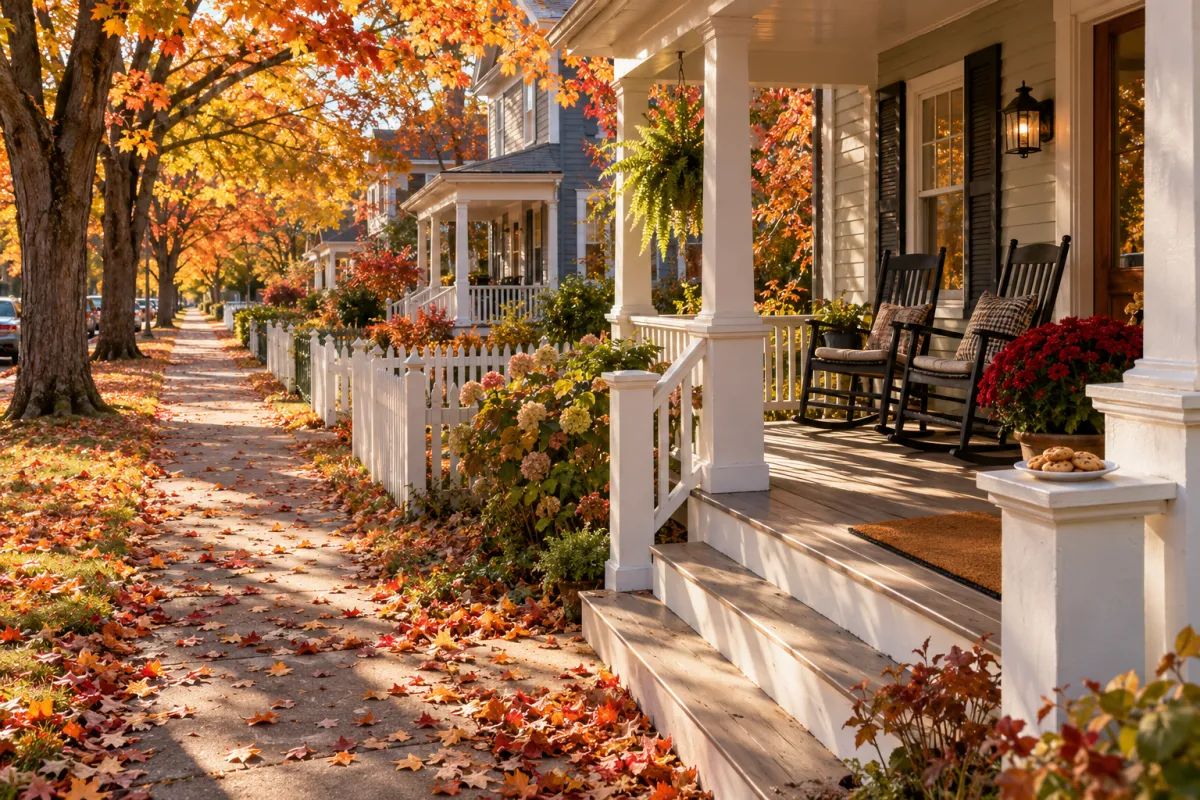
Short answer: here’s how to meet your neighbors without it feeling forced: say hello consistently, introduce yourself in the first couple of weeks after a move (“Hi, I’m Alex, I just moved into 3B”), show up to anything local (building events, block parties, community garden days), join the neighborhood group chat or Nextdoor, offer small favors and, once you know a few names, host something simple like a coffee or potluck. Below are 12 ideas that work in apartments and houses, scripts for the awkward first moments, a worked example of hosting a neighbor coffee, and how to turn neighbors into friends.
Why meeting your neighbors is worth it
Neighbors are the most convenient friends you’ll ever have: no commute, no scheduling across town, and lots of chances to bump into each other. They’re also the people most likely to notice if something’s wrong, water your plants or lend you a ladder.
Yet many Americans don’t know the people next door. In a Pew Research Center survey from March 2025, 26% of US adults said they knew all or most of their neighbors, down from 31% in 2018; 62% knew only some and 12% knew none. That gap is an opportunity: most of your neighbors probably wouldn’t mind knowing you better, but few people make the first move.
Neighborhoods are also a real source of friendship. In the May 2021 American Perspectives Survey, 35% of Americans with close friends said they had met one in their neighborhood.
How to meet your neighbors: 12 ideas
1. Introduce yourself early
The first two weeks after a move are the easiest time to introduce yourself, because being new gives you a reason. Catch neighbors outside, in the hallway or on the porch, and keep it short: your name, where you live and one easy question.
2. Say hello every single time
Consistency matters more than one big introduction. A wave, a “morning!” and eventually remembering names turns strangers into familiar faces. Familiarity is the foundation for everything else on this list. If you’re bad with names, jot them down in your phone after each conversation, with a detail or two (“Maria, 2B, has a beagle named Max”). Using a name the second time you meet someone is a small gesture that people remember.
3. Spend time out front
Sit on your porch or stoop, garden in the front yard, wash your car on the street, read on the steps. People who spend time outside meet far more neighbors than people who go straight from car to door.
4. Walk the neighborhood at the same time each day
A daily walk, especially with a dog, puts you in front of the same people repeatedly. Dog walkers in particular tend to chat, and dog parks are some of the easiest places to start a conversation.
5. Join the neighborhood group chat or Nextdoor
Many buildings and blocks have a group chat, an email list or a Nextdoor neighborhood. Introduce yourself as new, ask for a recommendation and watch for local events. Keep your posts friendly; neighborhood forums can get heated, and you want to be known as the helpful person.
6. Offer small favors
Accept a package, return a stray trash bin, shovel a little extra snow, share extra tomatoes from the garden. Small favors create small debts, and small debts create reasons to talk.
7. Ask for small favors too
Borrowing a ladder or asking for a contractor recommendation is a classic way to start a relationship. People like being helpful, and asking signals that you trust them.
8. Show up to local events
Block parties, building barbecues, school fairs, farmers markets, park cleanups and neighborhood association meetings all draw people who live near you. You don’t need to stay long; just showing up repeatedly makes you a known face.

9. Volunteer locally
A community garden plot, a park cleanup crew or a little free library you maintain all create regular, low-pressure contact with the people around you.
10. Become a regular at a neighborhood spot
The cafe, bakery or bar closest to home is a natural meeting point for neighbors. Go at the same time each week and you’ll start recognizing people from your street. Our guide to third places explains how to choose one.
11. Host something simple
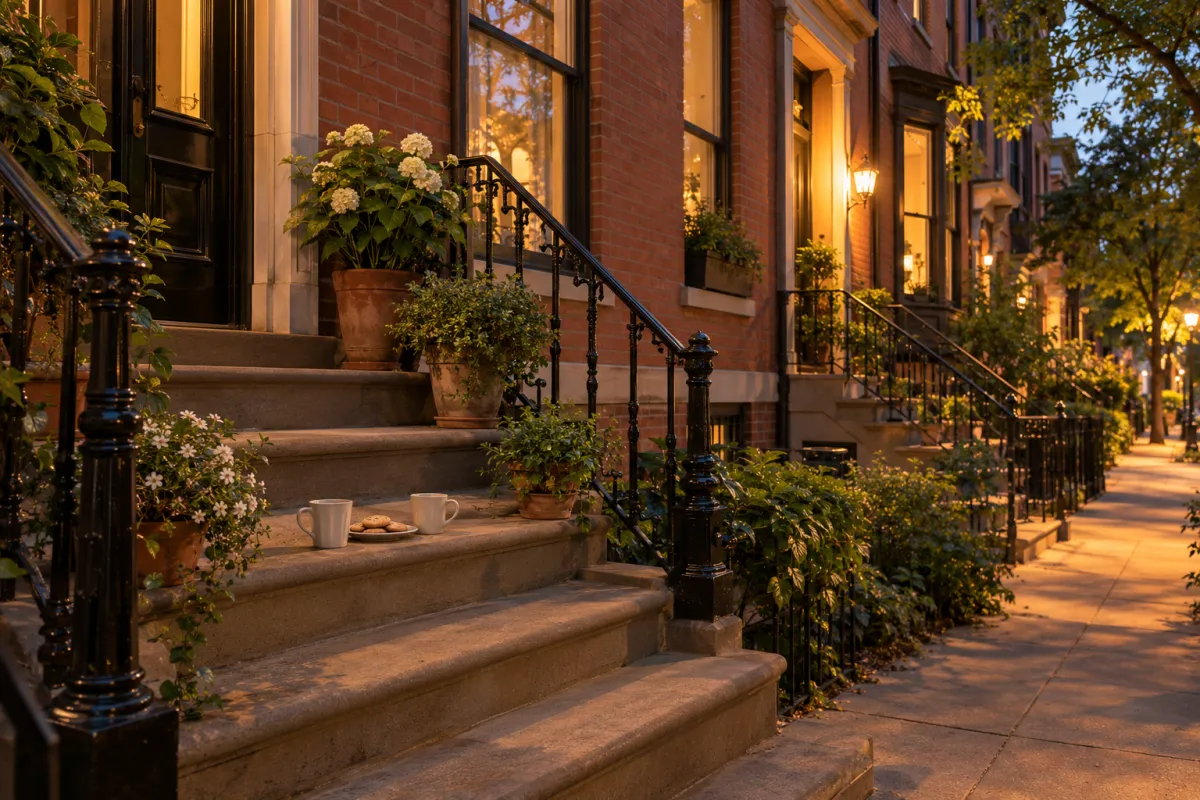
A porch coffee, a front-yard s’mores night, a potluck in the building’s common room. Hosting turns a set of hellos into a group. See the worked example below.
12. Organize a block party
If your street doesn’t have one, start it. Recruit two or three neighbors, pick a date and check your city’s rules: many cities require a permit to close a street, and the process varies, so look it up on your city’s website. If that’s too much, a backyard or park gathering works almost as well.
Apartment vs house: what works best
| Idea | Apartments | Houses and suburbs |
|---|---|---|
| Best places to bump into people | Lobby, mailroom, elevator, laundry room, roof deck | Front yard, sidewalk, driveway, mailbox |
| Easiest first step | Hello in the elevator; join the building chat | Wave from the porch; introduce yourself next door |
| Best gathering | Potluck or coffee in a common room or nearby cafe | Porch coffee, backyard cookout, block party |
| Main challenge | High turnover and anonymity | Cars: people drive in and out without meeting |
| Workaround | Building events and a group chat | Spend time out front; walk the block |
Scripts for meeting neighbors
The first hello
“Hi, I’m Alex. I just moved into 3B. Have you lived here long?”
“Hey, I’m your new neighbor in the blue house. Any tips for a good pizza place around here?”
The follow-up
“How did the garage sale go last weekend?”
“Thanks again for the plumber recommendation. He was great.”
The invitation
“We’re doing coffee on the porch Saturday morning around 10. Stop by if you’re around, no need to bring anything.”
“A few of us from the building are getting tacos at the place on the corner Friday. Want to come? Everyone pays their own.”
For the group chat
“Hi all, I’m Sam in 4A, just moved in. Looking forward to meeting everyone. If anyone needs a hand with anything, let me know!”
A worked example: hosting a neighbor coffee
Jamie (a composite example) moved into a 12-unit building and after a month knew only one neighbor’s name. Jamie decided to host a Saturday morning coffee in the building’s small courtyard:
- Ten days before: Jamie asked the one neighbor they knew to co-host, which made it feel less like a solo stunt.
- A week before: they slipped a short, friendly note under each door and posted in the building chat: “Coffee and pastries in the courtyard, Saturday 10 to 11:30. Drop by for five minutes or the whole time. Kids and dogs welcome.”
- On the day: Jamie set out coffee, a box of pastries and a few extra chairs, and introduced people to each other.
- After: seven neighbors came. Two suggested doing it monthly, and one started a group chat for the building.
Total cost: coffee and a box of pastries. Total time: about two hours. The result was a building where people now say hello by name.
How to turn neighbors into friends
- Repeat the small stuff. Regular hellos and short chats build the familiarity friendship needs.
- Make one specific invitation. A walk, a porch dinner, a local event together.
- Find a shared routine. Walk dogs together, carpool to the farmers market, garden at the same time.
- Help in a pinch. Being the neighbor who helps during a move, an illness or a new baby builds deep trust.
- Respect boundaries. Some neighbors prefer to keep it friendly but light. That’s fine; a warm hello is still worth a lot.
If you find the first step hard, our guide on how to put yourself out there breaks it into small steps, and our article on why it’s hard to make friends as an adult explains why so many people wait for someone else to go first.
Common mistakes
- Waiting too long. After a few months, introducing yourself feels awkward (“I’ve lived here since spring, I’m Sam”). It’s still worth doing, but the first two weeks are easiest.
- Only meeting online. A neighborhood app is useful, but a friendly face in the hallway matters more than a thumbs-up on a post.
- Starting with a complaint. If your first conversation with a neighbor is about noise or parking, it’s harder to build goodwill. Introduce yourself before any issue comes up.
- Going too big. A huge party for people you barely know can feel like pressure. A short, drop-in coffee is easier for everyone.
- Taking a cool response personally. Some people are busy or private. Keep saying hello; many warm up over time.
If you’re shy
You don’t need to knock on every door. Start with the lowest-effort steps: say hello consistently, spend time out front, and join the building chat. Let neighbors come to you while you garden or sit on the porch, and use small favors (returning a package, offering a ladder) as natural reasons to talk. If hosting feels like too much, co-host with one neighbor you already know, or simply go to someone else’s event and stay for twenty minutes.
If you’ve just moved
Meeting neighbors is one part of settling in. Our 30-day checklist on what to do when you move to a new city puts it alongside the admin and other social steps, and our 12-week plan for moving to a new city alone goes further.
Safety and courtesy
- Meet new neighbors in shared or public spaces before inviting anyone inside, and for anything beyond your street, choose a public place.
- Tell a friend or partner if you’re meeting someone you don’t know well.
- Don’t share your schedule, door codes or when you’ll be away until you know someone well.
- Keep neighborhood forum posts kind and factual.
- Respect a neighbor who prefers distance, and leave any conversation that makes you uncomfortable.
From hello to a plan
The neighbors who become friends are usually the ones who end up sharing a specific plan: a coffee at the corner cafe, a walk to the farmers market, a taco night where everyone pays their own.
Want to turn this into an actual plan? MeetNow is a free app for meeting people in person: a host posts a plan at a public place, says who pays (host pays, split, pay your own or free) and picks who joins. It is live on the web and works in your browser, starting in Malta. The Android app is on Google Play; the iPhone app is not in the App Store yet. Open MeetNow and see the plans posted in Malta.
FAQ: how to meet your neighbors
How do I introduce myself to my neighbors?
Keep it short and natural: knock or catch them outside, say your name and which unit or house you’re in, and ask one easy question, such as a local recommendation. For example: “Hi, I’m Alex, I just moved into 3B. Any tips for a good pizza place around here?”
Is it weird to knock on a neighbor’s door to say hello?
Not if you keep it brief and friendly, ideally at a reasonable time on a weekend afternoon or early evening. Many people prefer meeting outside, so catching neighbors in the hallway, on the porch or while gardening can feel more natural.
How do I meet neighbors in an apartment building?
Say hello consistently in shared spaces like the lobby, mailroom, elevator and laundry room; join or start a building group chat; go to any building events; and offer small favors like accepting packages. A simple building coffee or potluck in a shared space works well too.
How do I organize a block party?
Recruit two or three neighbors to help, pick a date, check your city’s rules (many cities require a permit to close a street), and invite neighbors with a flyer or group message. Keep it potluck-style and simple. If permits are a hassle, a backyard or park gathering works too.
How common is it to know your neighbors?
Less common than it used to be. In a Pew Research Center survey from March 2025, 26% of US adults said they knew all or most of their neighbors, down from 31% in 2018, and 12% said they didn’t know any of them.
How do I turn a neighbor into a friend?
Repeat contact, then make one specific invitation: a coffee on the porch, a walk, a backyard dinner or a trip to a local event together. Small, regular moments, like a weekly hello or a shared dog walk, build familiarity, and an invitation turns it into friendship.