

Camping asks more of a companion than almost any other activity. A tennis partner needs to show up for an hour. A camping partner shares a car, a cooler, a campfire and the quiet hours after dark, often for a whole weekend. That is why the usual advice falls flat when you are working out how to find a camping buddy: a vague call for campers posted to strangers rarely works, and when it does, you have no idea what you are getting.
The people who make good camping partners are easy to find, though. They show up to club outings, beginner programs, group hikes and outdoor workshops. The reliable path is to meet them in a low-stakes daytime setting first, then step up to one night at an established campground, and only then plan the bigger trips.
Below you will find a comparison of where to look, copy-and-paste messages, the questions to settle before anyone books a site, a safety checklist for the first meet and the first night, and a simple way to turn one good trip into a standing plan.
Why a camping buddy is a bigger ask than a hiking buddy
With most activity partners, a bad match costs you an awkward afternoon. With camping, it can cost you a weekend, a share of a booking you cannot get back and a long drive home with someone you would rather not talk to. The friction points are specific: one person wants to be asleep early and up for sunrise, the other wants a late fire; one budgets for simple trail meals, the other wants to grill; one treats Leave No Trace as a rule, the other as a suggestion.
None of that shows up in a profile or a chat thread. It shows up on a trail, at a picnic table and in how someone handles a delay or a wrong turn. So treat camping as the second or third thing you do with a person, not the first. If you mainly want daytime company outdoors, our guide on finding a hiking buddy and staying safe on the trail is the faster route, and many hiking partners turn into camping partners on their own.
The good news: because camping takes planning, people who camp tend to be planners. Clubs and groups that run overnight trips usually have leaders, gear lists and sign-up rules, which does a lot of the early vetting for you.

How to find a camping buddy: where to look
The options below are sorted roughly from most structured to most do-it-yourself. Structured options take less social effort and come with built-in safety norms; do-it-yourself options give you more control over who comes and where you go. Most people who end up with a regular camping partner use one structured option to meet people and one informal channel to keep plans going.
| Option | Cost | Effort | Best for |
|---|---|---|---|
| Sierra Club outings (local chapters and national trips) | Varies by outing and chapter; check the listing | Low to medium | Beginners who want a leader and a group |
| Appalachian Mountain Club activities | Paid membership; activity fees vary | Medium | Northeast and Mid-Atlantic campers who want regular member-led trips |
| Parks Canada Learn-to-Camp | Varies by park and program; check the park page | Low | First-time campers in Canada who want staff guidance |
| Local hiking or outdoor club | Varies by club; check dues before joining | Medium | Finding repeat partners close to home |
| Meetup outdoor and camping groups | Varies by group; check each event page | Low to medium | Larger cities with several active groups |
| Outdoor gear shop clinics and group events | Varies; some are free, some paid | Low | Meeting people who are learning the same skills |
| University outing clubs and alumni groups | Varies | Low to medium | Students, recent grads and alumni |
| Adult rec leagues, run clubs and climbing gyms | Varies by league or gym | Medium | Meeting active people first, camping later |
| Friends of friends and group chats | Free | Low | Trust built in from day one |
| Posting your own plan | Free | Low to medium | People who want to choose who joins |
Costs change by chapter, park and group, so confirm on each official site. Last checked January 2026.
Sierra Club outings
The Sierra Club organizes volunteer-led local hikes and outdoor adventures, plus national and international outings that include camping, backpacking and service trips, with a focus on conservation and enjoying nature. The practical move is to start with a local chapter day hike rather than a big trip. Outing leaders know the regulars, and a short conversation at the trailhead about who usually comes on the overnight trips can save you weeks of searching.
Appalachian Mountain Club
If you live in the Northeast or Mid-Atlantic, the Appalachian Mountain Club offers paid memberships that open access to thousands of member-led activities such as hikes, paddles and climbs, along with discounts on its lodging and gear. Look for trips labeled for beginners or introductions to backpacking. People who sign up for the same intro trip are, by definition, at the same stage you are, which makes them natural candidates for a follow-up weekend.
Parks Canada Learn-to-Camp
In Canada, the Parks Canada Learn-to-Camp program is designed for beginners who want introductory camping skills without prior experience or expensive gear, and staff help participants set up tents, start campfires and cook outdoors in select national parks and urban or historic settings. It is one of the lowest-pressure ways to try camping, and the other participants are often beginners too. If you click with someone over a stubborn tent pole, suggest a day hike together afterward.
Local clubs and Meetup groups
Search for terms like camping, backpacking, car camping and outdoor beginners plus your city or region. Before joining, look at the event history: a group that ran several outings in recent months with the same organizer is a better bet than one with a single event and a long gap. Our Meetup review covering pricing and how groups work explains what to look for in an organizer and how event fees are set.
Gear shop clinics, outing clubs and alumni groups
Many outdoor retailers run skills clinics on topics like backcountry cooking, navigation or first aid. Clinics are good places to meet people because everyone has the same goal and a shared topic to talk about. University outing clubs and alumni associations often run trips too, and the shared affiliation gives you a bit of built-in trust.
Adult rec leagues to meet people who camp
Not every camping partner is found through camping. Adult rec leagues are a practical way to meet people who already like being active: softball, kickball, volleyball or an ultimate frisbee team puts you next to the same faces every week. Run clubs and climbing gyms work the same way. Once a season of games has built some familiarity, mentioning a weekend trip feels natural rather than out of nowhere.
Your existing network
Ask in the group chats you are already in. A friend of a friend who camps is often the best first partner because someone you trust can vouch for them. If your circle is thin, our guide to finding activity partners when you have no one to go out with covers how to rebuild it one plan at a time.
Post your own plan
The fastest option is often to stop waiting for an invitation and host something small: a trailhead coffee and short hike, or a gear swap at a park picnic area. State the plan, the place, how many people and who pays, then choose who comes.
Hosting instead of waiting: MeetNow, a free app that works in your browser and on Android through Google Play, starting in Malta (the iPhone app is not in the App Store yet), is built around plans, not profiles. A host posts a plan at a public place, sets the seats and who pays, and picks who joins from short notes.
The step-up plan: from coffee to campsite
Think of finding a camping partner as a short ladder. Each rung tells you something the previous one could not, and each one is easy to walk away from if it is not working.
- Meet in public. A coffee before a club event, or simply chatting at a group outing. You learn whether conversation flows and whether your experience levels are close.
- Do a day trip together. Pick a popular trail with other hikers around. You learn pace, punctuality, how they handle a setback and whether they pack enough water.
- Plan one night of car camping. Choose an established campground with a host or ranger, toilets, other campers and road access. Bring separate tents and drive separate cars. You learn sleep habits, cooking style and how chores get split.
- Then go bigger. Backcountry sites, multi-night trips and remote areas come after you have one good night behind you.
This sounds slow, but in practice it can take only a few weekends, and it filters out mismatches before they cost you money or comfort. It also makes the invitation easier to give and accept: asking someone you have hiked with to join a one-night trip is a small request, while asking a stranger to spend four days in the backcountry is a big one.
Messages to post or send (copy and paste)
Good messages are specific: where, when, what level, what it costs and how many people. Vague posts get vague replies, or none at all. Adjust the details below to fit your trip.
Post in a club forum or Meetup group
Hi all, I am planning one night of car camping at a state park campground about two hours from the city, on a Saturday in mid-June. Beginner friendly, no long hikes, separate tents. I have a two-burner stove and a cooler to share. Site fee split evenly; everyone brings their own food. Looking for two or three people. Happy to meet for a coffee or a group hike beforehand so we are not total strangers. Reply here or message me.
Message someone you met on a group hike
Hi Jordan, it was good hiking with you on Sunday, and your tip about the lake loop was spot on. I am thinking about a one-night camping trip next month at a campground near that same area. Low-key: short hike, dinner at the site, back by Sunday lunch. Would you be interested? No pressure either way.
Ask your friends
Does anyone know someone who likes camping and is looking for a trip partner? I am planning a beginner-level weekend this summer and would love to go with a friend of a friend rather than a total stranger. Happy to grab a coffee first.
Reply to someone else’s post
Hi, I saw your post about the June trip. I have done a handful of car-camping weekends and one short backpacking trip, I own my own tent and sleeping gear, and I am fine splitting the site fee. I tend to go to bed early and like a quiet camp. Would you be up for a quick coffee or call before deciding?
Say it is not a fit, politely
Thanks so much for the chat. I think we are looking for pretty different trips, so I am going to pass on this one, but I hope you find a great group. Enjoy the summer.
That last script matters. You do not owe anyone a campsite because you had a coffee, and a clear, friendly no is kinder than going quiet.
Questions to settle before you book a site
Most camping fallouts come from expectations nobody said out loud. Run through this list together, ideally in a message thread so there is a written record.
- Experience: How many nights have you each camped? Car camping or backcountry?
- Schedule: Early riser or night owl? When do you want to leave and get home?
- Food: Shared meals or each person brings their own? Any allergies or dietary needs?
- Alcohol and campfire: Drinking or not? How late is the fire?
- Noise: Music at the site or quiet camp?
- Pets: Is anyone bringing a dog, and does the campground allow it?
- Gear: Who brings the stove, cooler, water filter and first aid kit? Everyone brings their own shelter and sleeping system.
- Driving: Separate cars for the first trip, then carpool later if it goes well.
- Leave No Trace: Agree on packing out trash and following campground rules.
Who pays, and what happens if someone cancels
Decide money before booking. The simplest options are an even split of the site fee with each person paying for their own food, or one person paying the site while the others cover shared groceries or gas. Whatever you choose, the person who books should be reimbursed promptly, and everyone should know the cancellation rules.
Those rules can be strict. In Canada’s national parks, reservations for the visitor season typically begin launching in January and February, with a specific launch date and time for each park or campground (Parks Canada Reservation Service). If you cancel at least 3 days before arrival you get a refund minus the non-refundable reservation fee and a cancellation fee, while cancelling later also forfeits the first night’s fee (Parks Canada). US state and federal reservation systems set their own policies, so read the rules for your specific campground. Agree in advance that whoever drops out late covers their share of any lost fees. It feels awkward to say, but much less awkward than arguing about it later.
First-meet and first-trip safety checklist
Camping with someone new combines two kinds of risk: meeting a stranger and being somewhere remote. Keep both small.
Before the trip
- Meet at least once in a public place, such as a coffee shop or a group outing, before any overnight plan.
- Look the person up: shared club membership, mutual friends or a history of hosting group events are all reassuring signs.
- Tell a friend who you are going with, the campground and site, your route and when you expect to be back. Agree on a check-in time.
- Check park alerts, fire restrictions and weather for the dates.
- Download offline maps and find out whether there is cell coverage at the site.
On the trip
- Have your own way home: drive your own car, or make sure you can leave without relying on your partner.
- Choose an established campground with a host or ranger and other campers nearby for the first trip.
- Sleep in your own tent the first time.
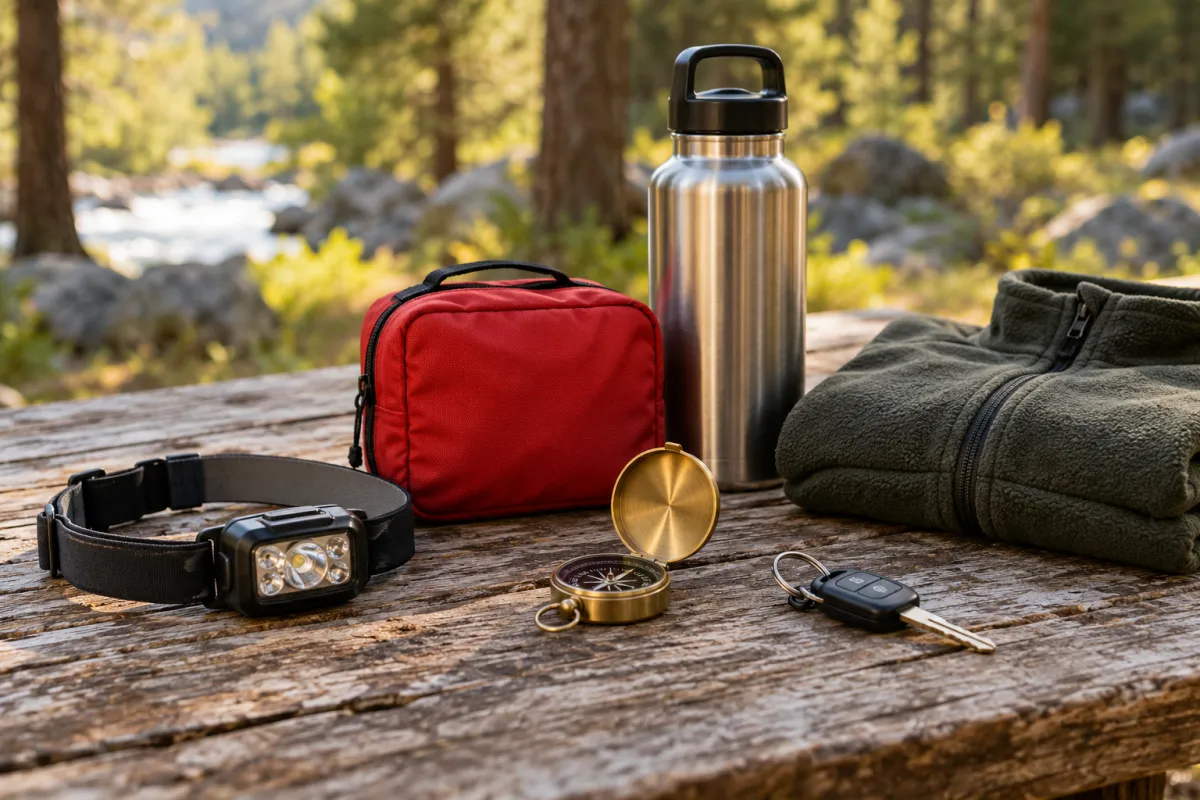
- Carry your own essentials: water, food, headlamp, warm layers, a small first aid kit and a fully charged phone.
- Keep your keys, phone and wallet on you or in your own tent.
- Agree on alcohol limits in advance, and stick to yours.
If something feels off
- Leave if you are uncomfortable. You do not need a reason that satisfies anyone else.
- Go to the campground host or ranger station if you need help, and contact emergency services if you feel unsafe.
- Text your check-in friend if plans change.
How to turn one trip into a regular thing
One good trip is a start; a standing plan is what makes a camping partnership last. A few habits help:
- Debrief on the drive home or by message. What worked, what you would change, where you would go next.
- Put the next date on the calendar before the trip fades. A loose plan for next month beats a vague someday.
- Rotate the planning. Take turns choosing the campground and booking, so it never becomes one person’s job.
- Start a shared gear list. Track who owns what so you can pack lighter as a team.
- Add one person at a time. A third camper makes costs lighter and conversations easier, and makes the group less dependent on two schedules.
Camping is seasonal for most people in the US and Canada, so keep the friendship going between trips. Join the same adult rec league, meet at a climbing gym, or invite your camping partner along when you are looking for someone to go to a comedy show with. If concerts are more your thing, our guide to finding someone to go to concerts with has ideas that work just as well for off-season plans. And if you moved recently and are building a circle from scratch, pair this with our 30-day plan for meeting people in a new city.
Want to turn this into an actual plan? MeetNow is a free app for meeting people in person: a host posts a plan at a public place, says who pays (host pays, split, pay your own or free) and picks who joins. It is live on the web and works in your browser, starting in Malta. The Android app is on Google Play; the iPhone app is not in the App Store yet. Open MeetNow and see the plans posted in Malta.
Frequently asked questions
Is it safe to go camping with someone you met online?
It can be, if you build trust in steps. Meet in a public place first, do a daytime activity together, and make your first overnight a single night at an established campground with other campers around. Drive separately, sleep in your own tent, tell a friend where you are and when you will be back, and leave if anything feels wrong.
Where can beginners find a camping buddy if they have no gear?
Start with structured programs and group outings. In Canada, Parks Canada’s Learn-to-Camp program is aimed at beginners without expensive gear, and in the US, club outings and gear shop clinics are good places to meet people at the same level. Many groups share gear lists, and some outdoor retailers rent equipment, so you can try camping before buying much.
How should camping buddies split costs?
Agree before anyone books. A common setup is splitting the site fee evenly while each person pays for their own food, or one person covering the site while others cover groceries or gas. Reimburse the person who booked quickly, and agree in advance that anyone who cancels late covers their share of lost fees.
Should we share a tent on the first trip?
No. Bring separate tents the first time you camp with someone new. It protects your privacy and sleep, makes it easy to keep different schedules, and keeps the trip low-pressure. Once you have camped together comfortably, sharing gear becomes a practical choice rather than an awkward one.
What if my camping buddy cancels at the last minute?
Check your campground’s cancellation rules as soon as you book, because fees often rise close to the arrival date. Decide in advance whether you will still go alone, invite someone else from your group, or cancel. Having a few people from a club or group chat as backups makes last-minute cancellations much less disruptive.
How do I find a camping buddy if I just moved to a new city?
Join one structured outdoor group and one weekly activity, such as an adult rec league or a run club, so you see the same people regularly. Go on day trips first, then suggest a one-night car-camping trip to the people you get along with. Hosting a small, specific plan at a public place is often faster than waiting for an invitation.