
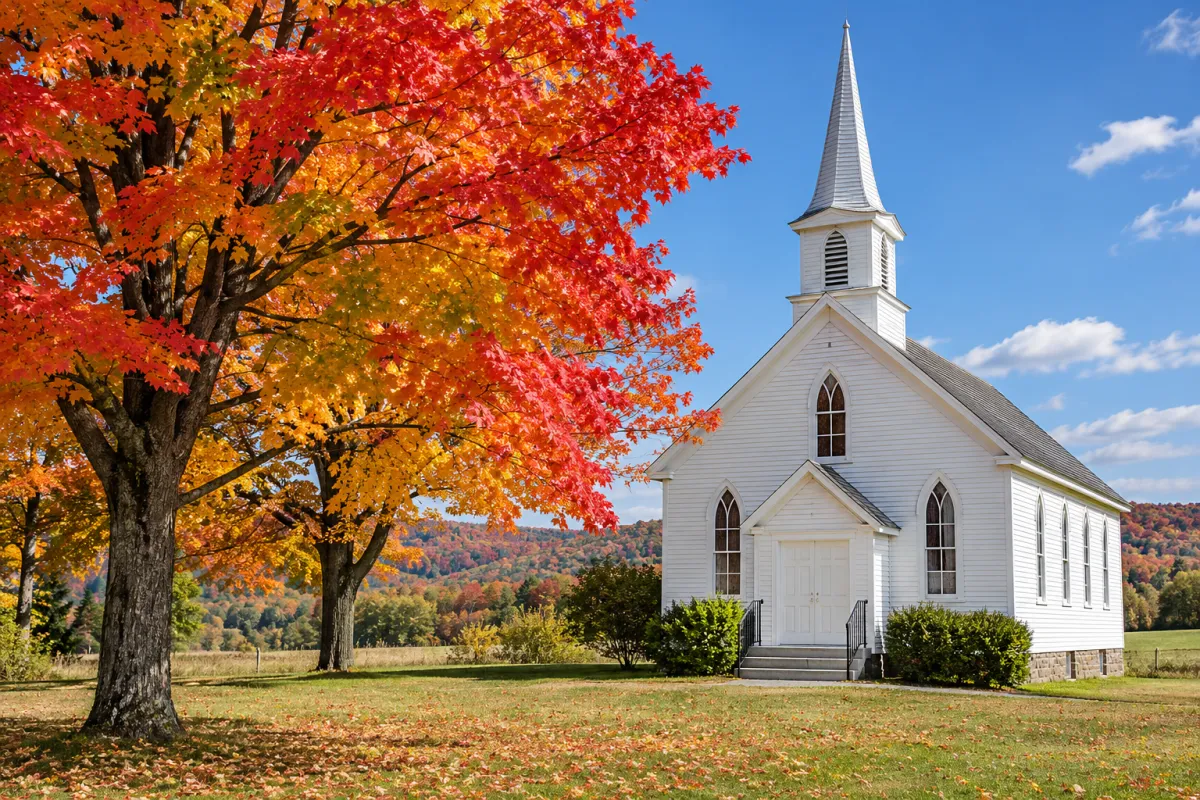
Short answer: joining a church to make friends in a new city works well, but rarely from Sunday services alone. The friendships come from what happens around the service: the coffee hour, a weekly small group, a volunteer team and the newcomer events. Choose a congregation that fits your beliefs and life stage, visit two or three in your first month, then commit to one small group and one way to serve for at least twelve weeks. That rhythm of seeing the same people every week is what turns friendly faces into friends.
This guide is for people who already value faith, or are open to it, and want a community after a move. It covers what the research says, how to pick a congregation, a week-by-week plan for your first three months, what to say, and the warning signs that a group is not healthy. Most of the advice also applies to synagogues, mosques, temples and other faith communities.
Why congregations help newcomers make friends
Adult friendships usually grow out of repeated, low-pressure contact with the same people. A congregation offers exactly that: a weekly gathering, people of all ages, and a culture that, at its best, actively welcomes strangers. In the Survey Center on American Life’s 2021 friendship survey, 21% of Americans said they had met a close friend at their place of worship, behind work (54%), school (47%), existing friends (40%) and their neighborhood (35%) (Survey Center on American Life).
The research also shows that showing up is not enough on its own. Sociologists Chaeyoon Lim and Robert Putnam studied a national panel of US adults and found that the higher life satisfaction of regular attenders was largely explained by the friendships they built inside their congregations, rather than attendance by itself (Harvard Kennedy School summary). In plain terms: sitting alone in the pew does not do much; the friends you make there do.
That is why the plan below focuses on the parts of church life where you talk to people, not just listen together.
How to choose a church after a move
Start with belief, then check fit. A congregation where you agree with what is taught is far easier to commit to for months.
- Your tradition or values. If you belonged to a denomination before, look for the same one first; the services and culture will feel familiar.
- Distance. If you moved somewhere rural, the local church may be the center of town life; our guide on making friends after moving to a small town covers that setting. In a city, pick somewhere within about 20 minutes. You will go more often, and you are more likely to see members around your neighborhood.
- Size. Large churches have more groups for specific life stages; small ones notice newcomers faster. Both work if you join a group.
- Groups for your stage of life. Check the website for young adults, singles, newcomers, couples, parents or seniors groups, plus weeknight small groups.
- Service times that fit your week. If the main service clashes with your routine, check whether there is an evening or second service.
Plan to visit two or three congregations over your first month. The best signal is simple: at which one did someone talk to you afterward?

Go beyond Sunday: where friendships form
Services are where you see people; these are where you get to know them:
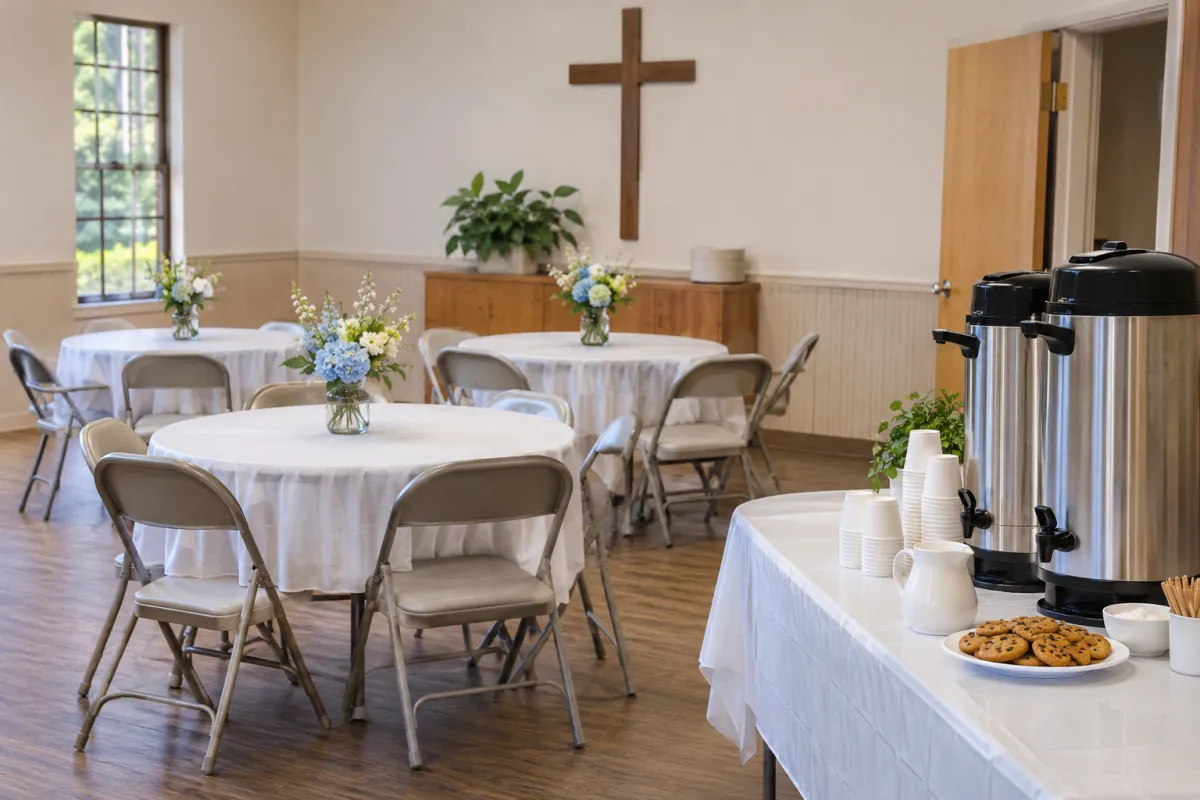
- Coffee hour or fellowship time. Stay 15 minutes after every service. It is the easiest place to say hello and learn names.
- Small groups or Bible studies. Eight to twelve people meeting weekly in a home or a classroom. This is the single most important step.
- Serving teams. Greeting, the coffee station, the kitchen, set-up crews, kids’ ministry, tech. Working side by side gives you something to talk about.
- Life-stage groups. Young adults, newcomers, parents of toddlers, retirees. People in your situation are often looking for friends too.
- Choir or worship team. Weekly rehearsals mean regular contact with the same small group.
- Service projects. Food pantries, shelter meals and neighborhood cleanups often welcome members and non-members alike.
- Newcomer lunches or classes. Many churches run a short welcome class or a lunch with the pastor; everyone there is new.
A 12-week plan for joining a church
| Week | Action | Time / cost | Goal |
|---|---|---|---|
| 1–3 | Visit two or three congregations; stay for coffee each time | 2 hours a week; free | Choose one to commit to |
| 4 | Fill in the connection or newcomer card; ask about small groups | 10 minutes | Get on the radar of the welcome team |
| 5 | Attend a newcomer lunch or welcome class if offered | 1–2 hours | Meet other new people |
| 5–6 | Join one weekly small group or study | 2 hours a week | See the same 8–12 people weekly |
| 6–7 | Sign up for one serving team | 1–2 hours, twice a month | Work alongside regulars |
| 8 | Invite one person from your group for coffee or lunch | 1 hour; pay your own | First one-on-one time |
| 9–10 | Go to a social event: potluck, picnic, game night | 2–3 hours; bring a dish | See people outside the program |
| 11 | Host something small: a walk, a brunch, a game night | 2 hours; low cost | Move from guest to friend |
| 12 | Review: who do you look forward to seeing? | 15 minutes | Decide where to invest next |
That is the core of joining a church to make friends in a new city: one congregation, one small group, one team, repeated. Twelve weeks may feel slow, but adult friendships take time: research from the University of Kansas suggests it takes around 50 hours together to go from acquaintance to casual friend (University of Kansas). A weekly small group plus a serving team gets you there far faster than Sundays alone. For the general version of this ladder, see our guide on turning acquaintances into friends in a new city.
Scripts for your first weeks
- At coffee hour: “Hi, I’m Sam. We just moved here from Denver and this is my second Sunday. How long have you been coming?”
- To a greeter or pastor: “I’m new in town and hoping to meet people. Which small groups would you suggest for someone in their thirties?”
- To your small group leader: “I’d love to help out somewhere. Is there a team that needs people?”
- The first invite: “A few of us were talking about trying that taco place on Main. Want to grab lunch after service next week?”
- Hosting: “I’m doing a simple brunch at my place on the 14th, just bagels and coffee. Would you and Chris like to come?”
A worked example
Here is an illustrative example. Maya, 31, moved from Atlanta to Columbus for a hospital job. She grew up in a Methodist church but had not attended in years. In her first three weekends she visited a large downtown church and two smaller neighborhood ones. At the second neighborhood church, a woman at the coffee table introduced her to the young adults leader.
In week five Maya joined the young adults group that met on Tuesdays, and in week seven she signed up to help with the monthly community dinner. By week nine she had gone for lunch twice with two women from the group, and in week eleven she hosted a small game night. Three months in, she had a standing Tuesday group, two people she texted during the week, and a reason to look forward to Sundays.
Pair church life with other weekly anchors so your social life does not depend on one place. Our 12-week plan for moving to a new city alone shows how to add a second and third anchor, and our guide on how to meet your neighbors covers the people on your street.
Red flags and boundaries
Most congregations are warm, ordinary communities. A few are not. Healthy groups let you go at your own pace; be cautious if you notice:
- Pressure to commit quickly: large donations, many hours or membership before you are ready.
- Discouraging questions or treating doubt as disloyalty.
- Pressure to cut back contact with friends or family outside the group.
- Secrecy around leaders, finances or what happens in certain meetings.
- Shaming people who leave or attend less often.
You never owe anyone an explanation for leaving a group. For first one-on-one meetups with people you have just met, stick to the usual basics: meet in a public place, tell a friend where you are going, arrange your own way home and leave if you feel uncomfortable.
If faith is not for you, the same plan works with a volunteer organization, a community choir or a weekly club; our 30-day plan for meeting people in a new city lists options.
Want to turn a coffee-hour conversation into an actual plan? MeetNow is a free app for meeting people in person: a host posts a plan at a public place, says who pays (host pays, split, pay your own or free) and picks who joins from the short notes people send. It is live on the web, starting with plans in Malta: Open MeetNow and see the plans in Malta.
Frequently asked questions (FAQ)
Is joining a church a good way to make friends in a new city?
It can be, especially if faith matters to you. Congregations meet weekly, welcome newcomers and run small groups and volunteer teams where you see the same people repeatedly. Research by Lim and Putnam found that the benefits of attending were tied to having close friends in the congregation, not just sitting in the service.
How long does it take to make friends at a new church?
Expect a few months. Most newcomers start recognizing people within three or four Sundays, but friendships usually form in a small group or serving team after several weeks of regular contact. Give one congregation at least twelve weeks before judging it.
Do I have to be religious to join a church for community?
Many congregations welcome visitors who are exploring, and some service projects, choirs and community events are open to anyone. Be honest about where you stand. If you do not share the beliefs at all, community groups, volunteering or interest clubs may suit you better.
How do I choose a church after moving?
Start with your tradition or values, then check practical fit: distance, service times, size, and whether there are small groups or a young adults or newcomers group for your life stage. Visit two or three over a month and choose the one where people talked to you after the service.
What are red flags when joining a new church?
Be cautious if you feel pressured to commit money or time quickly, are discouraged from questions, are told to cut back contact with friends or family, or see a lot of secrecy around leadership and finances. A healthy community lets you go at your own pace and leave freely.