

Short answer: if you’re wondering how to find a gym partner, the easiest place to look is your own gym, at your usual time: the regulars already share your schedule and location. Join a group class or small-group training session with a stable roster, say hello to the same faces for a couple of weeks, then make a specific offer tied to training, such as “Want to do leg day together on Thursday?” If your gym is quiet, try run clubs, climbing gyms, Meetup fitness groups or a friendship app, and say clearly what you train, when and where. Below we compare where to look, give scripts that aren’t awkward, and cover how to match goals, how to make friends at the gym and how to keep a partnership going.
Why a gym partner helps
A good partner makes you more likely to show up, push a little harder and enjoy the session. Research on what psychologists call the Köhler effect suggests people often work harder when someone is depending on them: in a 2011 study in the Journal of Sport & Exercise Psychology, Deborah Feltz and colleagues found that exercising with a virtually presented, slightly stronger partner improved persistence on exercise game tasks. You don’t need a lab to see the practical version: it’s harder to skip a 6 a.m. session when someone is waiting for you.
A gym partner can also become a real friend. You see each other several times a week, you share a goal, and you’re doing something side by side, which takes the pressure off conversation.
How to find a gym partner: where to look
| Option | Cost | Effort | Best for |
|---|---|---|---|
| Regulars at your gym, same time slot | Your membership | Low | A partner with your schedule and location built in |
| Group classes (strength, cycling, HIIT) | Often included or paid per class | Low | Meeting several people at a similar fitness level |
| Small-group or semi-private training | Paid | Low | A stable group of 3 to 6 people with a coach |
| Gym community boards, apps or social channels | Free | Low | Posting exactly what you’re looking for |
| Functional fitness or strength gyms with class formats | Paid membership | Medium | Strong communities with the same people every class |
| Run clubs and climbing gyms | Free to paid | Low | Social training outside the weight room |
| Meetup fitness groups and friendship apps | Free to low | Medium | When your gym is quiet or you’re new in town |
| Coworkers and friends | Free | Low | Lunch or after-work sessions near the office |
The options in detail
Regulars at your gym
Go at the same time on the same days for two or three weeks and you’ll start to recognize people. That shared schedule is the hardest thing to find in a partner, and the regulars already have it. Start with a nod and a “morning,” then small talk between sets or while waiting for equipment.
Group classes
Classes are the easiest place to make friends at the gym, because the format puts you in the same room, at the same time, with the same people every week. Pick one class you’ll attend consistently, stand in roughly the same spot and arrive a few minutes early. People who chat before class are usually open to talking after it too.
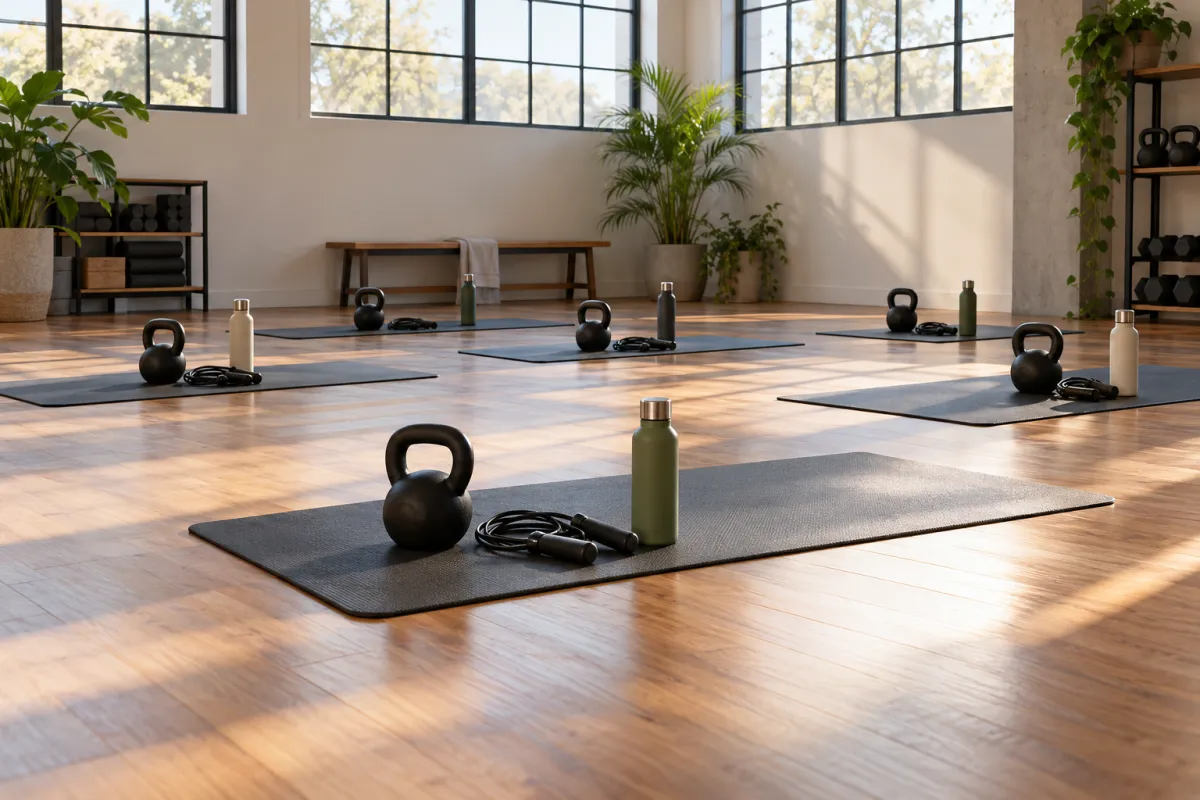
Small-group training
Small-group personal training (three to six people with one coach) combines structure with a built-in group. You’ll be matched with people at a similar level, and the coach often encourages partner work. It costs more than a standard membership but can be worth it if you want accountability.
Community boards and gym apps
Many gyms have a community board, a members’ app or a social media group. Post a short, specific note (see the scripts below). Front-desk staff and trainers also know which members train at which times and may introduce you.
Strength and functional fitness gyms with class formats
Gyms built around coached classes tend to have tight communities, because members do the same workout at the same time and often socialize outside the gym. If your current gym feels anonymous, a class-based gym may be a better fit for meeting people.
Run clubs and climbing gyms
If you’re open to training outside the weight room, run clubs and climbing gyms are two of the most social fitness settings. Group runs are often free and weekly; bouldering involves lots of resting and chatting between attempts. Our ranking of hobbies to meet new people covers both.
Apps and Meetup
Friendship apps and Meetup fitness groups help when your gym is quiet or you’ve just moved. Be specific in your profile: your training style, your usual times and your gym or neighborhood. Our comparison of apps to find activity partners covers which apps work best for fitness and sports.
What to say: scripts that aren’t awkward
The key is timing and specificity. Don’t interrupt someone mid-set or wearing headphones; use natural moments like sharing equipment, between sets or after class.
Opening lines
- “Are you using this bench, or can I work in between sets?”
- “How long have you been doing this class? I’m still figuring out the kettlebell part.”
- “Nice lift. How long did it take you to work up to that?”
Making the offer
“I’m usually here Tuesdays and Thursdays around 6. Want to do the squat session together next week? It’d help me actually show up.”
For a community board or app
“Looking for a gym partner at the downtown location, weekday mornings around 6:30. Intermediate, working on strength (squat, bench, deadlift) three days a week. Happy to spot and be spotted. All levels welcome if our schedules match.”
Moving beyond the gym
“Want to grab a smoothie after? There’s a place next door.”
Notice that each offer is about the workout first. That keeps it low-pressure and makes it clear you’re looking for a training partner, not something else.
Matching goals, level and schedule
A partner who’s a great person but trains at different times, or for completely different goals, won’t last. Before committing, check:
- Schedule: do your usual days and times overlap at least twice a week?
- Goals: strength, endurance, weight loss, a race, general fitness? Similar goals make shared sessions easier to plan.
- Level: a partner slightly stronger than you can be motivating; a huge gap makes sessions awkward for both.
- Style: do you like to chat, or train in focused silence? Do you want a spotter, a coach-like partner or just someone to show up with?
- Reliability: agree on how much notice you’ll give if you need to cancel.
Treat the first two or three sessions as a trial. If it works, set a standing schedule. If it doesn’t, say so kindly; you can still be friendly gym acquaintances.

How to make friends at the gym
Finding a workout partner and making friends at the gym overlap but aren’t the same. If friendship is your goal:
- Be a regular. Same days, same times. Familiarity comes before friendship.
- Choose social formats. Classes and small-group training beat solo sessions with headphones.
- Learn names. Introduce yourself after a class: “I’m Sam, by the way. See you Thursday?”
- Stay a few minutes after. Stretching and cooling down is when people talk.
- Join gym events. Challenges, socials and charity workouts are designed for members to mix.
- Suggest something outside. After a few weeks, a smoothie, a hike or a 5K together turns gym friends into friends.
Gym etiquette when approaching people
- Don’t interrupt sets or approach people wearing headphones and clearly in the zone.
- Keep first conversations short and about training.
- Take a short answer or a “no thanks” gracefully and don’t ask again.
- Don’t give unsolicited form advice unless someone looks at risk of injury, and even then, be kind.
- If someone seems uncomfortable, give them space.
Safety when training with someone new
Training with a new partner is usually low-risk, especially inside a staffed gym. For anything outside the gym, such as a run, a hike or a session at a different location, meet in a public place, tell a friend where you’re going, arrange your own transportation and leave if anything feels off. Start new lifts with proper spotting, and don’t attempt heavy maxes with someone whose spotting you haven’t seen yet. For tips on meeting people from apps, see our checklist on whether friendship apps are safe.
Keeping the partnership going
- Set a standing schedule rather than planning each session.
- Share a simple plan for each session so nobody wastes time deciding.
- Agree on a cancellation rule, such as 24 hours’ notice.
- Build a small crew. Two or three people to train with means sessions happen even when one person can’t make it.
- Celebrate progress together, whether it’s a new personal best or a month of consistency.
Looking for partners for other activities too? Our guide for when you have no one to go out with covers where to look by activity, and our guide on how to find a tennis partner works for court sports.
A worked example
Jordan (a composite example) trains alone at 6:30 a.m. three days a week and keeps skipping Fridays. Jordan switches the Tuesday session to the 6:30 strength class and starts arriving five minutes early. In week 2, Jordan works in with another regular on the squat rack and they chat between sets. In week 3, Jordan says, “I’m always here Tuesday, Thursday and Friday at this time. Want to do Fridays together? It’d stop me skipping.” They agree to a two-week trial. A month later, they’ve added a third member who joins on Thursdays, and the three of them get breakfast after Friday sessions, each paying their own.
Turning a session into a plan
The partnerships that last have a clear plan: a fixed time, a place, a small group and, for anything outside the gym, a simple answer to who pays. That’s the format MeetNow is built around: a host posts a plan, such as a Saturday morning run from a park entrance followed by breakfast where everyone pays their own, people ask to join, and the host picks who comes.
Want to turn this into an actual plan? MeetNow is a free app for meeting people in person: a host posts a plan at a public place, says who pays (host pays, split, pay your own or free) and picks who joins. It is live on the web now, starting in Malta, with the phone apps on the way: open MeetNow and see the plans near you.
FAQ: how to find a gym partner
Where is the best place to find a gym partner?
Your own gym at your usual time is the best place, because the regulars already share your schedule and location. Group classes, small-group training sessions and gym community boards or social channels are the next best options, followed by run clubs and friendship or activity apps.
How do I ask someone to be my gym partner without it being weird?
Start with a few friendly hellos over several sessions, then make a specific, low-pressure offer tied to training: “I’m usually here Tuesdays and Thursdays at 6. Want to do the squat session together next week?” Keep it about the workout first.
Is it OK to approach people at the gym?
Yes, with good timing. Avoid interrupting someone mid-set or wearing headphones, and choose natural moments like between sets, sharing equipment or after a class. Respect a short answer as a no and keep it about training.
Does having a workout partner help?
Many people find a partner helps them show up. Research on the Köhler effect, including a 2011 study in the Journal of Sport & Exercise Psychology, found people persisted longer at exercise tasks when working with a slightly stronger partner. A partner with a similar schedule also makes sessions harder to skip.
How do I make friends at the gym?
Go at the same time each week, join classes with a stable group, say hello to regulars, and stay a few minutes after class. Once you train with someone regularly, suggest something outside the gym, such as a smoothie or a weekend hike.
What if my gym partner keeps canceling?
Talk about it directly and agree on a rule, such as 24 hours’ notice. If it keeps happening, train on your own schedule and invite them when it fits; a partner should add consistency, not remove it. Having two or three people to train with also helps.